Grocery shopping is one of those jobs nobody counts as cooking, but it costs spoons before you’ve touched a pan. There’s parking, walking, noise and fluorescent lights. There’s reaching up, bending down and making a hundred small decisions. Then you get home and have to unpack the lot. So for low energy grocery shopping, I’m aiming for three things: fewer trips, fewer decisions and less walking.
It doesn’t help that supermarkets are designed to slow you down. Store layout, end-of-aisle specials and packaging are all built to nudge what ends up in your trolley. A lot of that nudging is towards ultra-processed foods and impulse buys. That’s not a conspiracy. It’s retail, and there’s a decent body of research on it. The reading list is at the bottom for my fellow nerds.
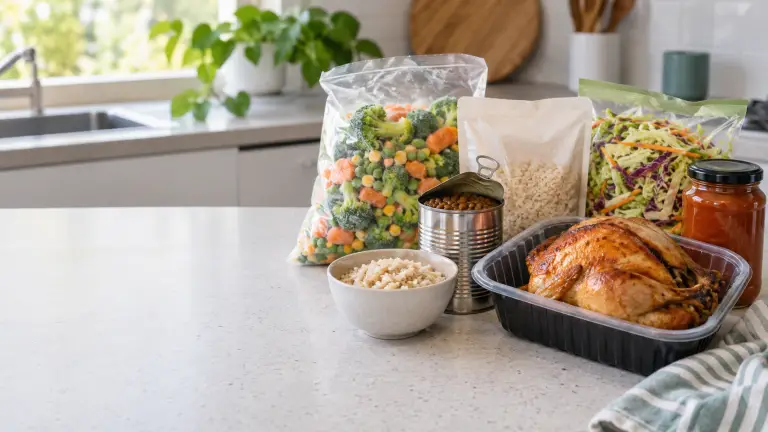
To be clear, convenience ingredients and junk food aren’t the same thing. Frozen veg, tinned fish and jarred garlic save spoons. A trolley full of snacks you didn’t plan on mostly costs money. Junk food isn’t banned here, and sometimes it’s exactly the right call. The point is to make informed, conscious choices, rather than letting the supermarket make them for you.
Here’s what actually helps.
Make a list, and only make it once

You’ll often see “studies show a shopping list stops impulse buying”. The research is more mixed than that headline suggests. Lists seem to help some people some of the time. For me, the bigger win is spoons. With a list, the decisions happen once, sitting down, instead of in aisle seven while my brain quietly clocks off.
To set one up:
- Write a list of your cooking staples. Most of them you won’t need to buy every week.
- Keep it in a notes app or stuck to the fridge.
- Each week, copy the list and delete anything you don’t need.
- Pick a few recipes for the week and add their ingredients to the same list.
- If you shop at more than one store, keep a separate list for each.
- Sort the list in the order you walk the store, so you’re not backtracking for the milk.
Our No Spoons Meal Plans do most of this for you. They come with shopping lists already sorted by supermarket aisle, plus notes on where to find the specialty bits. If you’re setting up a pantry from scratch, the Pantry Stock & Substitutions guide is a good starting point.
Let someone else do the walking
When it comes to low energy grocery shopping, the most spoon-friendly trip is often the one you don’t take. Home delivery and click-and-collect take the walking, lifting and decision fatigue out of the job. A delivery fee can be a lot cheaper than the spoons a trip would cost you.
Most online stores let you save favourites or reorder a past shop, so your staples list does double duty.
If you do go in person:
- Go at a quieter time if you can. There’s less noise, a shorter queue and less dodging.
- Use the trolley for support, even for a small shop.
- Ask staff to reach high or heavy items. That’s part of their job, not a favour.
- Unpack the cold things first and leave the rest for later. The tins will keep. The coffee won’t make itself.
Shop the edge of the store first
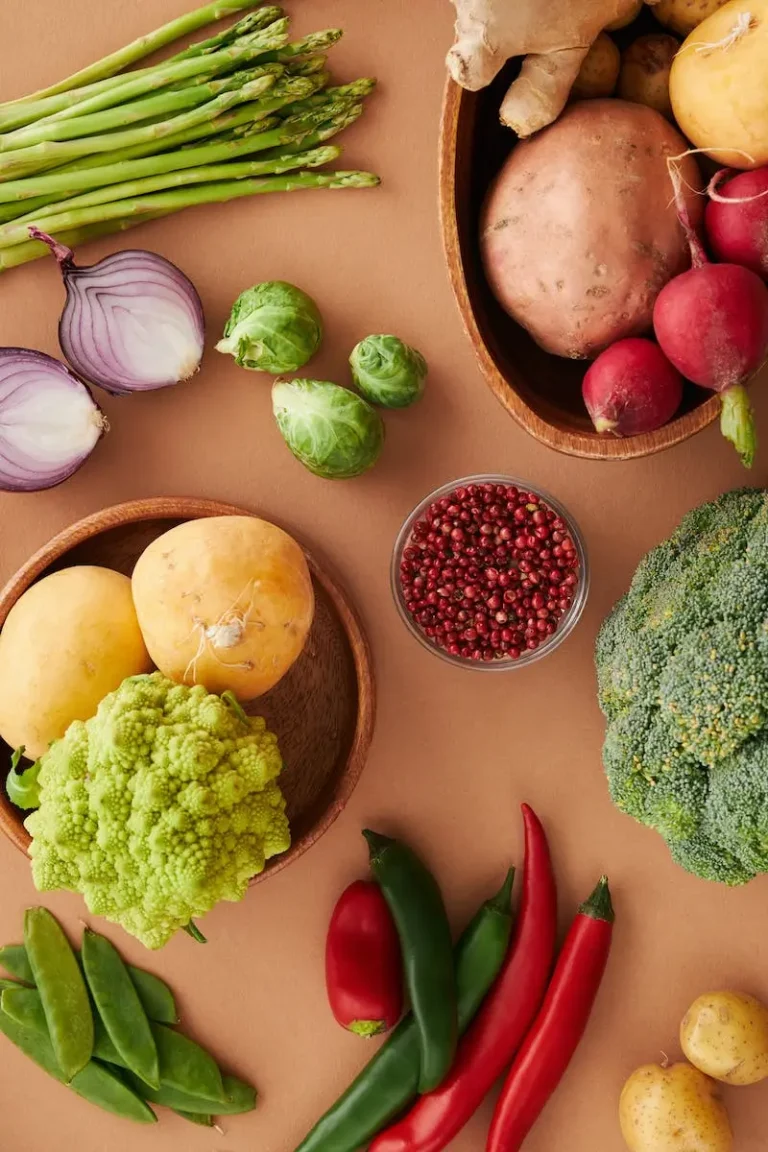
Fresh fruit, veg, meat, eggs and dairy usually sit around the outside of the supermarket. Start there and fill the trolley with those first.
It’s good for spoons as well as dinner. Wandering up and down every middle aisle adds a lot of steps, and it’s where the things you didn’t plan on buying are waiting. Stick to the edge and you’ll walk less and face fewer temptations to go off plan.
Don’t skip the middle aisles altogether, though. That’s where you’ll find nuts, seeds, frozen veg, tinned fish, jarred garlic and the other convenience ingredients that are genuine accessibility tools. Go in for what’s on your list, then head back out.
Remember that packaging is advertising
Cartoon characters on a box are doing two jobs. They’re talking to kids, who can become lifelong fans of a product. And they’re talking to adult nostalgia, which is very good at overriding the sensible part of your brain. That doesn’t make the food off-limits. It’s just worth noticing who the packaging is talking to.
Health claims work in a similar way. Research suggests that putting a health claim on the front of a pack makes people rate the product as healthier, whether or not it is. My favourite example: a 3 kg bag of certified organic, gluten-free, plant-based sugar is still a 3 kg bag of sugar.
Marketing has been shaping what we think of as “normal” food for a long time. In the 1920s, a bacon producer, the Beech-Nut Packing Company, hired Edward Bernays, Sigmund Freud’s nephew and an early pioneer of public relations. Bernays had a doctor write to around 5,000 physicians, asking whether a heartier breakfast was better for people than a light one. About 4,500 agreed. Bernays had that result published widely, alongside the suggestion that bacon and eggs made a fine hearty breakfast. Bacon sales went up. Coffee sales presumably followed.
To be fair to the pig, people were eating bacon and eggs well before Bernays came along. What the campaign added was doctors’ authority behind the idea that a bigger breakfast is a healthier one. And I say this as someone with a bacon jam recipe on this site. Bacon isn’t the villain here. The lesson is how easily expert-sounding endorsements end up on a label or in an ad.
Ingredient lists are useful, but they have limits
“Avoid anything with more than five ingredients” is a popular rule. I understand the appeal, but ingredient count is a blunt tool. A jar of curry paste might have fifteen ingredients and save you a good handful of spoons. A product with three ingredients can still be mostly sugar. Marketers know the rule too, which is why “only five ingredients!” now turns up on the front of packs.
Two quicker checks:
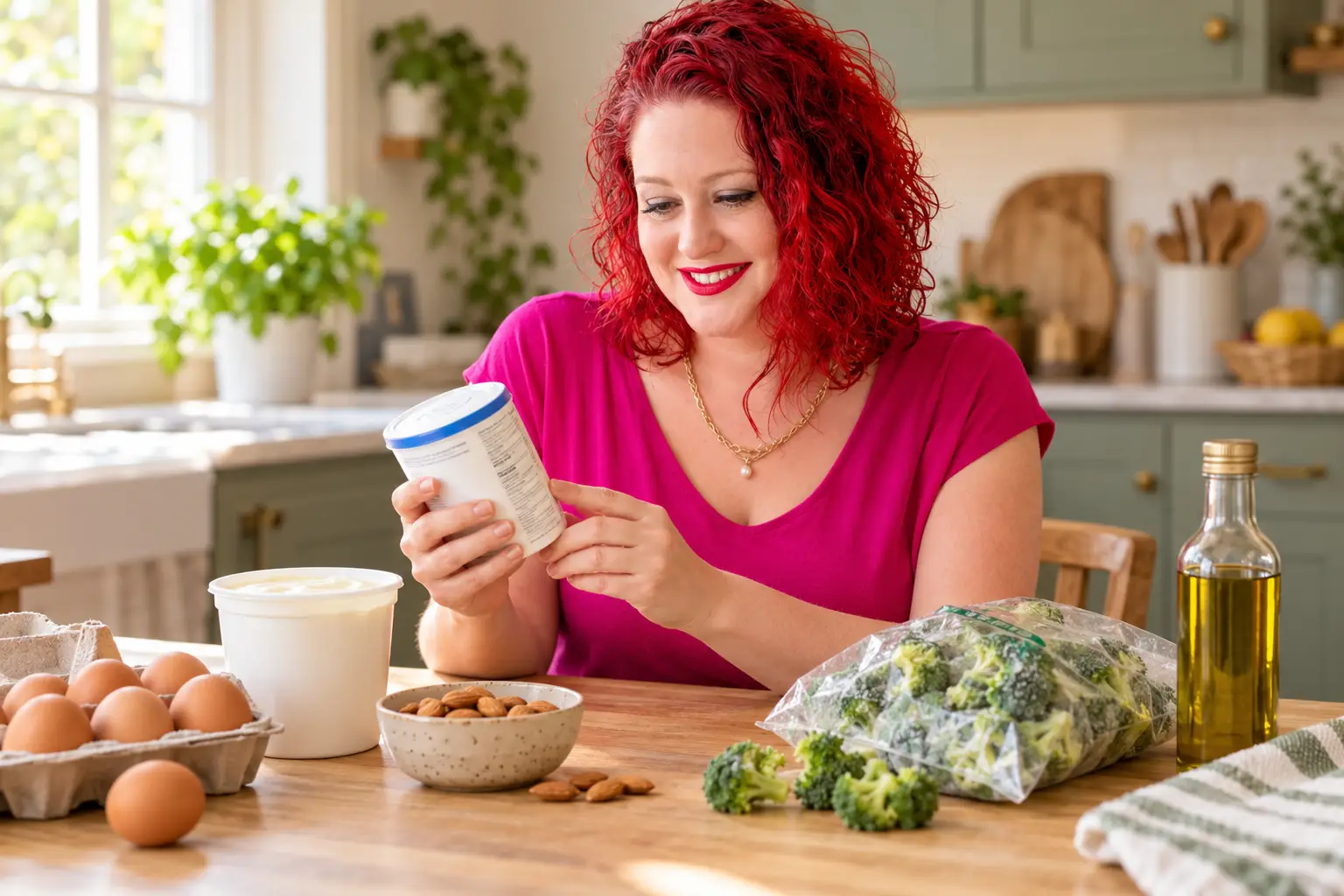
- The first few ingredients. In Australia, ingredients are listed from most to least by weight, so the top three tell you what you’re mostly buying.
- The per 100 g column on the nutrition panel. Use it to compare two similar products side by side. Ignore the per-serve column, because serving sizes vary wildly.
If you’d like more on this, we’ve written about healthy vs highly processed food.
When the shopping isn’t happening at all, here’s how we handle eating out on keto.
Low energy grocery shopping: the short version
- Write your list once, then reuse it.
- Shop online or use click-and-collect on low-spoon weeks.
- Shop the edge of the store first, then visit the middle aisles only for what’s on your list.
- Make informed, conscious choices rather than impulse buys.
- Treat specials and end-of-aisle displays as suggestions, not instructions.
- Notice who the packaging is talking to.
- Compare products per 100 g, not by their front-of-pack claims.
- Count frozen, tinned and jarred shortcuts as real food, because they are.