

Ultra-processed food gets talked about like it’s one big villain. Some headlines would have you binning half your pantry and making your own bread. On a CRPS flare day, I can’t even face buttering bread.
The part that bugs me as a nutrition nerd is how often the shortcuts No Spoons relies on get lumped in with soft drink and packet chips. Frozen veg, a tin of chickpeas and a bag of pre-cut coleslaw aren’t the same thing as a frozen meal with 40 ingredients. So I went back to how ultra-processed food is actually defined and what the research says. Then I worked out what’s useful when your spoons are limited.
What “ultra-processed food” actually means
Most research uses the NOVA classification, developed by researchers at the University of São Paulo in Brazil (Monteiro and colleagues, 2019). It sorts food by how much processing it’s been through, not by how “healthy” it is. There are four groups:
- Group 1: Unprocessed or minimally processed. Food that’s been cleaned, cut, dried, frozen, pasteurised or fermented, with nothing added. Think fresh or frozen fruit and veg, eggs, meat, fish, milk, plain yoghurt, nuts, dried legumes, rice, oats, coffee and tea. (Plain coffee, that is. The caramel syrup is a different conversation.)
- Group 2: Processed culinary ingredients. Things you cook with rather than eat on their own: oils, butter, salt, sugar, honey and vinegar.
- Group 3: Processed foods. Group 1 foods with a few Group 2 ingredients added to preserve or flavour them. Tinned legumes in brine, tinned tuna, tomato passata, cheese, bacon and fresh bakery bread all sit here.
- Group 4: Ultra-processed foods. Products made largely from substances extracted from food or made in a lab, plus additives you wouldn’t keep in your kitchen. These include flavours, colours, emulsifiers, sweeteners and thickeners. Soft drinks, packet chips, lollies, most biscuits, instant noodles, flavoured yoghurts, most breakfast cereals, nuggets and many ready meals land here.
Here’s what most headlines skip: plenty of convenient food is Group 1 or Group 3. “Processed” and “ultra-processed” are not the same thing.
What the evidence says (and what it doesn’t)
Ultra-processed food is a big part of how Australia eats.
Evidence Emerging or mechanistic (2011–12 Australian national nutrition survey, a nationally representative cross-sectional study of what people ate): a 2019 analysis in BMJ Open found ultra-processed foods supplied about 42% of the energy Australians ate, the largest share of any NOVA group, ahead of unprocessed and minimally processed foods at about 35%. A survey of what people ate can’t show whether eating this way affected anyone’s health.
The research on health outcomes is substantial. A 2024 umbrella review in The BMJ pulled the main reviews together, so I’ll use it as the example.
Evidence Emerging or mechanistic (2024 umbrella review in The BMJ: 45 pooled analyses from 14 meta-analyses, mostly observational studies, about 9.9 million people): higher ultra-processed food intake was linked to a higher risk of cardiovascular death, type 2 diabetes, and anxiety and other common mental health conditions. The review rated its certainty as very low for cardiovascular death, moderate for type 2 diabetes and low for anxiety. It can’t show the food caused any of these, it didn’t test CRPS or pain, and some types of ultra-processed food weren’t linked to harm.
That’s a consistent pattern, and I take it seriously. A few caveats keep it in perspective:
- People who eat a lot of it often differ in other ways too, and the review’s authors flag that themselves.
- NOVA is a blunt tool. It can put a supermarket wholemeal loaf in the same group as a can of lemonade, and those are not nutritionally the same food.
- The “why” is still being worked out. The usual explanations are that these foods are soft, energy-dense and easy to eat quickly, and that they can crowd out whole foods that carry fibre, protein and micronutrients. That’s reasoning, not something the review tested. Plausible isn’t the same as settled, though.
My read: eating mostly less-processed food is a sensible default. A packet of something on a bad day is not a moral failing, and it’s not going to undo you.
The bit the headlines miss: most No Spoons shortcuts aren’t ultra-processed
If you rely on convenience food to get fed, this matters. Most of the shortcuts we use are Group 1 or Group 3:
- Frozen vegetables and fruit. Group 1. Frozen soon after picking, with nothing added.
- Pre-cut veg and bagged salad. Group 1. Someone else just did the chopping. (The dressing sachet in a salad kit is a different story.)
- Tinned legumes, tomatoes and fish. Group 3. Usually just the food, water, salt and maybe oil.
- Plain microwave rice. Often just rice, water and a little oil. Check the label, as flavoured versions can add a lot more.
- Cheese, including pre-grated. Group 3. Pre-grated may contain an anti-caking agent, which is a small trade-off for not grating.
- Supermarket roast chicken. Mostly chicken. Seasoning and injected brines vary between stores, so it’s worth a glance at the ingredients.
We’ve written more about this in why convenience ingredients are accessibility tools.
How to spot ultra-processed food on the label
 You don’t need to memorise the four groups. Flip the packet over and check the ingredients list:
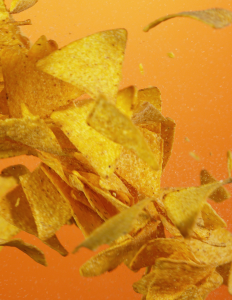
- Would you keep these ingredients in your kitchen? If not, that’s the biggest giveaway. Look for things like maltodextrin, hydrolysed protein, invert sugar, emulsifiers, thickeners, flavours and colours (often listed as numbers).
- Is the list long? A long ingredients list isn’t proof on its own, but it’s a hint.
- Is sugar in there under several names? Glucose syrup, dextrose and fruit juice concentrate can all appear in the same product.
- Does it contain intense sweeteners? These matter if you eat keto or low carb, because many “sugar-free” products are still ultra-processed.
Squinting at tiny print in the aisle isn’t a good use of spoons, so I mostly scan instead. The Yuka app reads the barcode and flags the additives and hidden sugars that often give an ultra-processed product away. I do most of my scanning from the couch before I shop. Just ignore its overall score for keto staples like butter and cheese, which it marks down. I’ve covered how I use it in my Yuka app review.
Then make an informed call. Knowing what something is lets you choose it on purpose, rather than throwing it in the trolley on autopilot.
Low-spoon swaps that don’t add work
Lots of “healthy swap” lists swap a packet for a project, like homemade pizza or hand-crumbed nuggets. That’s not a swap when you’re low on spoons. These keep the effort about the same:
- Flavoured yoghurt → plain Greek yoghurt with a handful of frozen berries. Same effort, and the berries thaw while you sit down.
- Muesli bars → a handful of nuts or a cheese stick. Both are grab-and-go.
- Instant noodle cup → microwave rice with frozen veg and a tin of tuna. It’s still one bowl and it still goes in the microwave.
- Chicken nuggets → supermarket roast chicken, pulled apart with your hands or a fork. You don’t need a knife.
- Soft drink → sparkling water with a splash of bottled lime juice. No squeezing required.
- Packet chips → salted nuts or roasted chickpeas from a tub. Still salty and crunchy.
- Breakfast cereal → boiled eggs from the supermarket chiller, or plain yoghurt. Ready-boiled eggs are a legitimate shortcut.
If none of these suit your body, budget or spoons today, that’s fine too. A swap only helps if you’ll actually do it.
If you’d rather skip the swapping and just get dinner on the table, the No Spoons Day and Low Spoons recipes are sorted by how much effort they take.
What I actually do
 Perfect, unprocessed eating every day? Absolutely not.
My approach is much more practical:
- Shop the perimeter first. Fresh produce, meat, dairy and eggs mostly live around the edges of the supermarket. Doing those aisles first means fewer steps, fewer decisions and less temptation to wander off-plan.
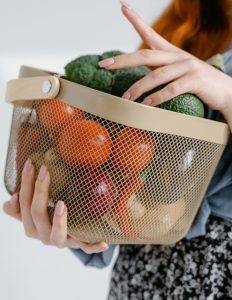
- Stock the freezer and pantry with Group 1 and Group 3 shortcuts. Frozen veg, tins and microwave rice mean that a low-spoon dinner is still mostly real food.
- Keep a couple of no-spoons backups. Some of those are ultra-processed, and I’m fine with that. Eating something beats eating nothing, especially when pain has already killed my appetite.
- Treat junk food as a choice, not an accident. I’d rather decide to have the chips than discover I’ve eaten them.
If you track what you eat, our quick-start guide to macros pairs well with label reading.


