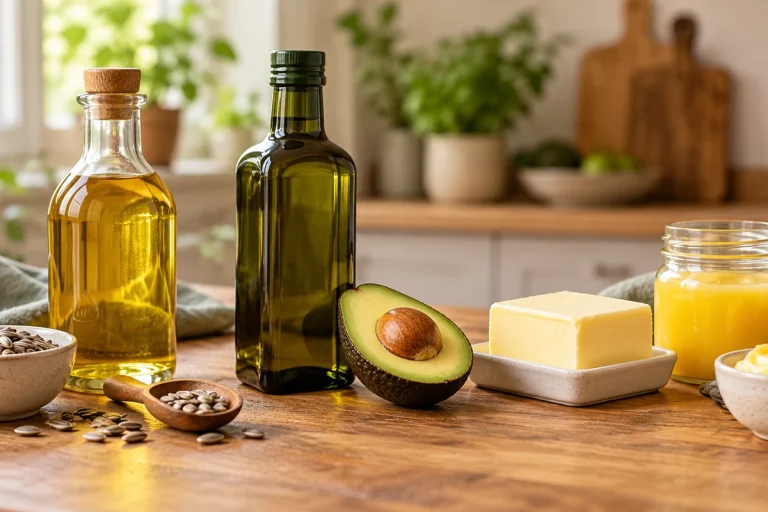
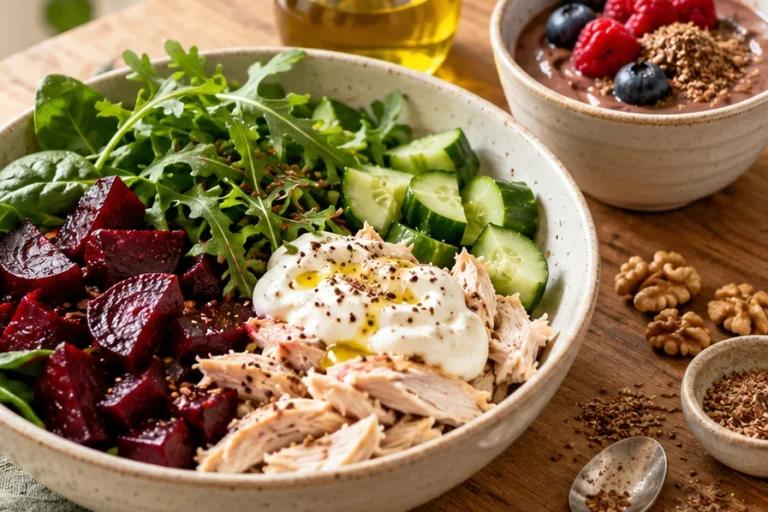
This is where we keep everything we know about our commonly used ingredients in one place. What each one is, the brand we reach for, where to find it, roughly what it costs, and what to use instead when the shelf is empty.
Prices are a guide only. They change with the season, the store and the specials. Brands we name are the ones we use at home. Any affiliate links are noted on the cards. We appreciate your support using our links; it helps keep our content free and supports other small businesses. We actively look for Australian-owned brands where possible.
Nothing to show yet.
Dairy-free milk and cream
Dairy-free milk and cream
Almond milk
A light, mild milk made from almonds and water. Pour it on low-carb cereals, into smoothies and coffee, or use it in baking and sauces.
More details for Almond milk
Most supermarkets stock almond milk with the plant-based milks, either in the long-life section of the milk aisle or in the fridge next to the dairy milk. It usually comes in a carton.
What’s usually in it: water, almonds, sometimes a thickener or stabiliser, salt.
Almond milk is thin and mildly nutty. Brands vary a lot in how much almond they contain, so some taste watery and others are richer. Unsweetened, sweetened, vanilla and barista versions are all common, and barista versions are made to hold up better in hot coffee. Long-life cartons are kept in the pantry until opened, and fridge cartons are kept cold.
Check the ingredients: Look for added sugar, sweeteners, thickeners such as gums, flavours, oils and preservatives. Sweetened and vanilla versions can have quite a bit of added sugar, so check the label if you are keeping an eye on carbs. Almond milk is made from nuts, so check the label if you are avoiding them. Check the label before you use it, as some may contain things you would prefer to avoid. On a no spoons day, a carton poured over a bowl of something easy is a perfectly good breakfast.
Dairy-free milk and cream
Coconut cream
A thick, rich cream made from coconut flesh. Stir it into curries, soups and sauces, or whip it for a dairy-free topping.
More details for Coconut cream
Most supermarkets stock coconut cream in the Asian foods aisle or the canned goods aisle, near the coconut milk. It usually comes in a tin or a small carton, and some stores also sell a shelf-stable powder.
What’s usually in it: coconut extract, water, sometimes a thickener or stabiliser.
Coconut cream is thicker and richer than coconut milk, with less water. Brands vary in how thick they are, and some tins separate, with a firm layer on top and thinner liquid underneath. A good shake or stir brings it back together. Some products are labelled coconut milk, coconut cream or light, so it’s worth a look.
Check the ingredients: Look for added thickeners such as guar gum, preservatives, sugar and sweeteners. Plain coconut cream should list mostly coconut extract and water. Check the label before you use it, as some may contain things you would prefer to avoid. On a no spoons day, a tin tipped into a pan with some curry paste and frozen veg is dinner.
Also see
Used in
Dairy-free milk and cream
Coconut milk
A creamy, mild liquid made from coconut flesh. Pour it into curries, soups, smoothies and sauces for body and a gentle coconut flavour.
More details for Coconut milk
Most supermarkets stock coconut milk in the Asian foods aisle or the canned goods aisle, near the coconut cream. It usually comes in a tin or a carton, and the carton versions are often with the plant-based milks.
What’s usually in it: coconut extract, water, sometimes a thickener or stabiliser.
Coconut milk is thinner than coconut cream, with more water. Tins and cartons are not the same thing. Tinned coconut milk is thick and made for cooking, while carton coconut milk is lighter and made for drinking. Tins often separate, with a firm layer on top and thinner liquid underneath, and a good shake or stir brings it back together. Some are labelled light or lite, and brands vary in how rich they are.
Check the ingredients: Look for added thickeners such as guar gum, preservatives, sugar and sweeteners, especially in the carton versions. Plain tinned coconut milk should list mostly coconut extract and water. Check the label before you use it, as some may contain things you would prefer to avoid. On a no spoons day, a tin tipped into a pan with curry paste and frozen veg is dinner.
Fruit and veg
Fruit and veg
Bagged slaw

Pre-shredded cabbage and carrot, ready to use straight from the bag. A no-chop base for salads, tacos and sides on days the knife stays in the drawer.
More details for Bagged slaw
Most supermarkets have a bagged slaw or slaw salad kit in the fresh food aisle, usually near the other bagged salads.
What’s usually in it: Shredded green cabbage, Shredded red cabbage, Shredded carrot
Some bags add other shredded vegetables, such as kale, Brussels sprouts, broccoli or kohlrabi. Some also add spring onion or herbs.
Check the ingredients: Kits often come with a dressing sachet. Some also include crunchy toppings, seeds, nuts or noodles. Keep the dressing for a no spoons day, or chuck it out and use your own.
Used in
- Beefin’ in Paradise – Keto Caribbean Beef Bowl
- Beet Cackleberry Pie
- Brewed Bliss Tacos (Beer-Glazed Chicken Tacos)
- Creamy Sesame Chicken Noodle Salad (One Pan, One Bowl)
- Honey Lime Glazed Chicken with Stir fry Vegetables
- Lamb, Actually – Mediterranean Lamb Salad with Smoky Carrot Dressing
- Vietnamese Prawn and Chicken Salad
Fruit and veg
Garlic cloves
Fresh garlic, broken from the bulb. Crush, slice or roast the cloves for full garlic flavour in nearly any savoury dish.
More details for Garlic cloves
Most supermarkets stock garlic in the fresh veg section, near the onions and potatoes. It is sold as whole bulbs, loose or in nets. Some stores also sell peeled cloves in tubs or bags.
What's usually in it: garlic.
Garlic comes as whole bulbs and as pre-peeled cloves, which save the peeling. Elephant garlic is milder. Garlic that has sprouted is a little bitter, so you can remove the green shoot from the centre of the clove. If crushing, slicing or peeling is a lot today, minced garlic and frozen garlic cubes are easy swaps.
Check the ingredients: Fresh garlic should list only garlic, so check peeled and packaged cloves for oil, preservatives and added ingredients. Check the label before you use it, as some may contain things you would prefer to avoid.
Fruit and veg
Kaleslaw

Finely shredded kale, usually mixed with cabbage and carrot, ready to use from the bag. A no-chop, sturdy base for salads, wraps and sides.
More details for Kaleslaw
Most supermarkets have kale slaw or a kale salad kit in the fresh food aisle, usually near the other bagged salads.
What’s usually in it: shredded kale, shredded green cabbage, shredded red cabbage, shredded carrot.
Some bags add other shredded vegetables, such as Brussels sprouts, broccoli or kohlrabi. Some also add herbs, and some are mostly kale with only a little cabbage.
Check the ingredients: Kits often come with a dressing sachet. Some also include crunchy toppings, seeds, nuts, dried fruit or cheese. Keep the dressing for a no spoons day, or chuck it out and use your own. Check the label before you use the dressing or toppings, as some may contain things you would prefer to avoid.
Used in
- Beefin’ in Paradise – Keto Caribbean Beef Bowl
- Beet Cackleberry Pie
- Brewed Bliss Tacos (Beer-Glazed Chicken Tacos)
- Creamy Sesame Chicken Noodle Salad (One Pan, One Bowl)
- Honey Lime Glazed Chicken with Stir fry Vegetables
- Lamb, Actually – Mediterranean Lamb Salad with Smoky Carrot Dressing
- Vietnamese Prawn and Chicken Salad
Fruit and veg
Low carb potatoes
Potato-style options with fewer carbs than regular spuds. Roast, mash or fry them for bakes, chips and sides.
More details for Low carb potatoes
Low carb potatoes are in the fresh veg section, near the other potatoes and root vegetables. Some potato varieties are sold as lower in carbs, and root vegetables such as turnip, swede, celeriac and radish are common stand-ins. Frozen versions are in the freezer aisle.
What's usually in it: potato, or root vegetables such as turnip, swede, celeriac or radish.
Lower carb potatoes are still potatoes, so they have carbs, just fewer than regular spuds. Check the carbs per serve to see if they suit your recipe. Root vegetable swaps taste different. Turnip is a little peppery, celeriac is nutty and radish mellows when roasted.
Check the ingredients: Plain vegetables should list only the vegetable, so check packaged and frozen versions for coatings, seasonings and oils. Check the label before you use it, as some may contain things you would prefer to avoid.
Fruit and veg
Ready-made zucchini noodles
Zucchini cut into noodle-style strands, ready to cook. Toss into a hot pan for a minute or two, or serve raw, for a no-spiralising pasta swap.
More details for Ready-made zucchini noodles
Most supermarkets stock ready-made zucchini noodles in the fresh veg section, near the bagged salads and pre-cut vegetables. Some stores also sell them in the freezer aisle. They usually come in a tray or bag, and some stores only stock them in season.
What's usually in it: zucchini.
Some packs are mixed with other vegetables, such as carrot or beetroot. Zucchini noodles release water as they cook, so cook them briefly in a hot pan, then drain well or pat dry. Fresh noodles are best used by the date on the pack, and frozen ones can usually be cooked straight from the freezer.
Check the ingredients: Plain zucchini noodles should list only zucchini, so check kit versions for added sauces, seasonings and oils. Check the use-by date. Check the label before you use it, as some may contain things you would prefer to avoid. On a no spoons day, a tray tipped into a pan with a jar of sauce means you didn't spiralise a thing.
Used in
Sugar-free sweeteners
Sugar-free sweeteners
Allulose
A rare sugar that tastes and behaves a lot like sugar. Use it in low-carb baking, sauces, ice cream and syrups, where it browns and stays soft.
More details for Allulose
Allulose is less common on supermarket shelves. Some supermarkets stock it in the baking aisle near the other sweeteners, or in the health food or free-from section. Health food stores and online shops carry more brands. It usually comes as granulated crystals or a syrup, and is kept in the pantry.
What’s usually in it: allulose, and nothing else. Some products blend it with monk fruit or stevia.
Allulose is not as sweet as sugar, so recipes often use more of it, and blends with monk fruit or stevia are sweeter. It dissolves easily, browns and caramelises more like sugar, and keeps baked goods and cold desserts softer than most other low-carb sweeteners. It can brown faster in the oven, so keep an eye on baking. It also has no cooling taste. The granulated and syrup forms are not a one-for-one swap, so check the pack.
Safety note on sugars: Large amounts of allulose can cause bloating, gas or loose bowels in some people. Start small and see how you go. If you manage diabetes, check with your healthcare team about the sweetener you use.
Check the ingredients: Plain allulose should list only allulose, so look for blends, bulking agents such as maltodextrin or dextrose, and added flavours, because these change the carbs. Check the label before you use it, as some may contain things you would prefer to avoid. On a no spoons day, a spoonful stirred into coffee or over some cream and berries is sweet enough.
Sugar-free sweeteners
Inulin
Inulin
More details for Inulin
Inulin is less common on supermarket shelves. Some supermarkets stock it in the health food or free-from section, and health food stores and online shops carry more brands. It usually comes in a resealable bag or tub and is kept in the pantry. Inulin is also added to plenty of packaged foods, such as bars, yoghurts and some low-carb breads, so you may be eating it already.
What’s usually in it: inulin, and nothing else. It is usually made from chicory root, and sometimes from agave.
Inulin is a white powder that is mildly sweet and dissolves well in liquids. It adds body and a little sweetness, and some recipes use it alongside other sweeteners to improve texture. It can brown quickly in baking, and it can make baked goods a bit softer or denser than sugar does.
Safety note on fibre: Inulin is a fermentable fibre, and it can cause bloating, gas or loose bowels, especially in larger amounts. Start with a very small amount and see how you go. If you have a sensitive gut, IBS or follow a low FODMAP way of eating, check with your healthcare team, because inulin is high in FODMAPs.
Check the ingredients: Plain inulin should list only inulin. Some “inulin” products are blends with sweeteners, so look for added sugars, other fibres or flavours. Check the label before you use it, as some may contain things you would prefer to avoid. On a no spoons day, a small spoonful in a smoothie is plenty.
Sugar-free sweeteners
Monk fruit (pure)
A very concentrated, zero-calorie sweetener from monk fruit. A small pinch or a few drops sweeten drinks, sauces and desserts.
More details for Monk fruit (pure)
Pure monk fruit is less common on supermarket shelves. Some supermarkets stock it in the baking aisle or the health food section, and health food stores and online shops carry more brands. It usually comes as drops or a fine powder and is kept in the pantry.
What’s usually in it: monk fruit extract. Some drops add water or glycerine.
Pure monk fruit is very sweet, so it is hard to measure and is usually sold as drops or a small amount of powder. It can have a mild fruity aftertaste. Most products sold as monk fruit sweetener are blends with erythritol, which behave differently, so check the pack. Pure monk fruit has no bulk, so it doesn’t work in recipes that need volume or structure.
Safety note on sugars: Pure monk fruit extract has no sugar alcohols, but many blends are mostly erythritol, which can cause bloating, gas or a laxative effect in some people. Check the pack.
Check the ingredients: Look for erythritol, maltodextrin, dextrose and added flavours. Check the label before you use it, as some may contain things you would prefer to avoid.
Sugar-free sweeteners
Stevia (pure)
A very concentrated, zero-calorie sweetener from the stevia plant. A tiny pinch or a few drops sweeten drinks, dressings and sauces.
More details for Stevia (pure)
Most supermarkets stock stevia in the baking aisle near the other sweeteners, or in the health food aisle. It comes as drops, powder or sachets and is kept in the pantry.
What’s usually in it: stevia leaf extract. Some drops add water, glycerine or flavour.
Pure stevia is many times sweeter than sugar, so a tiny amount goes a long way. Too much can taste bitter, with a liquorice-like aftertaste. Because it has no bulk, it doesn’t work in recipes that need volume or structure. Drops, powder and granulated stevia are not interchangeable, so check the pack for how much to use.
Safety note on sugars: Pure stevia extract has no sugar alcohols, but many products labelled stevia are bulked with erythritol, maltodextrin or dextrose, which change the carbs and how it sits in your gut. Check the pack.
Check the ingredients: Look for the bulking agents listed above, and for added flavours. Check the label before you use it, as some may contain things you would prefer to avoid. On a no spoons day, a few drops in your coffee is the whole job.
Sugar-free sweeteners
Xylitol
A sugar-like sweetener from the sugar alcohol family. Use it in baking, drinks and sauces, and keep it well away from dogs.
More details for Xylitol
Xylitol is in the baking aisle near the other sweeteners, or in the health food section, and some stores stock it only online. It usually comes in a bag or tub and is kept in the pantry. It is also found in chewing gum, mints and some toothpaste.
What’s usually in it: xylitol, and nothing else.
Xylitol looks and measures like sugar, and many recipes use it one for one. It can leave a slight cooling taste. It doesn’t caramelise like sugar, and it doesn’t work well in yeast baking.
Safety note on sugars: Xylitol is toxic to dogs, even in small amounts, so keep it well out of reach of pets, and call a vet straight away if a dog eats some. Like other sugar alcohols, it can cause bloating, gas or a laxative effect in some people, especially in larger amounts. Start small and see how you go.
Check the ingredients: Plain xylitol should list only xylitol, so check for blends and added ingredients. Check the label before you use it, as some may contain things you would prefer to avoid.
Sweeteners
Classic monkfruit sweetener
A white, sugar-style sweetener made from monk fruit extract, usually blended with erythritol. Use it cup for cup in low-carb baking, drinks and desserts.
More details for Classic monkfruit sweetener
- Pantry
- Sugar-free (unconfirmed)
Heads up
It can have a cooling aftertaste and goes gritty in cold desserts and sauces.
On the label
Most get their bulk from erythritol. Check the ingredient list to see what it's based on.
Brands we checked
- Lakanto (Classic Monkfruit Sweetener)
Swaps
Any erythritol-based white sweetener, 1:1. For ice cream, half allulose or xylitol stops it freezing rock hard.
Storage
Sealed in the pantry, like sugar.
Read more
What it is
Classic monkfruit sweetener is less common on supermarket shelves than regular sugar. Some supermarkets stock it in the baking aisle near the other sweeteners, or in the health food or free-from section. Health food stores and online shops carry more brands and sizes. It usually comes in a resealable bag and is kept in the pantry.
What’s usually in it: erythritol, monk fruit extract. Some blends add natural flavours.
Classic monkfruit looks like white sugar and is the one to reach for when a recipe wants caster or granulated sugar, while golden monkfruit suits brown sugar. Many brands measure cup for cup like sugar, but check the bag, because sweetness varies. Like other erythritol blends, it can leave a cooling taste in your mouth, and it doesn’t brown or caramelise exactly like sugar. Powdered versions are available too, and suit icing and smooth sauces.
Safety note on sugars: Most classic monkfruit blends are mostly erythritol, which is a sugar alcohol. Large amounts can cause bloating, gas or a laxative effect in some people, so start small and see how you go. Research on erythritol and long-term health is still ongoing, so if you have heart health concerns, check with your healthcare team.
Check the ingredients: Look for what the blend is mostly made of, and watch for added sugars, bulking agents such as maltodextrin or dextrose, and other sweeteners, because these change the carbs. Pure monk fruit extract is very concentrated, so it is rarely sold on its own for baking. Check the label before you use it, as some may contain things you would prefer to avoid. On a no spoons day, a spoonful stirred into your coffee or over some cream and berries is sweet enough.
Good for
Cakes, muffins and cookies, and anywhere you'd use white sugar.
Where to buy
Coles and Woolworths (health food aisle), and online low carb stores.
- Low Carb Emporium Affiliate link
Used in 1 recipe
Erythritol
A zero-calorie, sugar-like sweetener from the sugar alcohol family. Use it in low-carb baking, desserts and drinks, and start with a small amount.
More details for Erythritol
- Pantry
- Sugar-free (unconfirmed)
Heads up
A cooling taste. It recrystallises as it cools, so custards, sauces and ice cream turn gritty or hard. It won't dissolve in cold drinks and can dry out low-fat bakes. Heart-risk research is unresolved; see Keto Sweeteners and Blood Sugar.
On the label
Check whether it's pure erythritol or a blend with monk fruit or stevia.
Brands we checked
- Lakanto Monk Fruit Sweeteners (erythritol blend)
Swaps
Lakanto Golden or Classic monkfruit sweetener behaves the same in the oven. For ice cream, use half erythritol and half allulose or xylitol, so it doesn't freeze rock hard.
Storage
Sealed in the pantry, like sugar.
Read more
What it is
A sugar alcohol. It's the bulk in most granulated keto sweeteners, including most "monk fruit" blends. I've never seen pure erythritol at the supermarkets but I have bought it from iHerb or Low Carb Emporium. We don't cook with pure erythritol. Not to say that you can't. We both experimented with it in the early days of keto.
Sweetness / how to measure
About 70% as sweet as sugar, so use roughly 1⅓ cups for every cup of sugar.
Good for
Crisp, snappy cookies, meringue and pavlova. It crisps, browns and whips like sugar. Powdered, it's good for frosting. It rarely upsets the gut.
Where to buy
Coles and Woolies stock a few different erythritol blends. Low Carb Emporium have a full range of keto-friendly sweeteners, including pure erythritol
- Low Carb Emporium Affiliate link
Used in 1 recipe
Sweeteners
Golden monkfruit sweetener
A brown-sugar-style sweetener made from monk fruit extract, usually blended with erythritol. Use it in low-carb baking, sauces and marinades, where you’d normal
More details for Golden monkfruit sweetener
Golden monkfruit sweetener is less common than white sweeteners. Some supermarkets stock it in the baking aisle near the other sweeteners, or in the health food or free-from section. Health food stores and online shops carry more brands and sizes. It usually comes in a resealable bag and is kept in the pantry.
What’s usually in it: erythritol, monk fruit extract. Some blends add natural flavours.
Golden monkfruit has a warm, caramel-like flavour and a soft brown colour, so it suits recipes that call for brown sugar. It measures cup for cup like sugar in many brands, but check the bag, because sweetness varies. Like other erythritol blends, it can leave a cooling taste in your mouth, and it doesn’t brown or caramelise exactly like sugar.
Safety note on sugars: Most golden monkfruit blends are mostly erythritol, which is a sugar alcohol. Large amounts can cause bloating, gas or a laxative effect in some people, so start small and see how you go. Research on erythritol and long-term health is still ongoing, so if you have heart health concerns, check with your healthcare team.
Check the ingredients: Look for what the blend is mostly made of, and watch for added sugars, bulking agents such as maltodextrin or dextrose, and other sweeteners, because these change the carbs. Pure monk fruit extract is very concentrated, so it is rarely sold on its own for baking. Check the label before you use it, as some may contain things you would prefer to avoid. On a no spoons day, a spoonful stirred into your porridge or over some cream and berries is sweet enough.
Used in
- Avocado White Chocolate Brownies (The Green Secret)
- Brewed Bliss Tacos (Beer-Glazed Chicken Tacos)
- Bun Cha Steak Noodles (Sear, Slice, Sorted)
- Cambodian Pepper Beef
- Keto Apple Chai Muffins
- Keto Bacon Jam (Sticky, Salty, Sorted)
- Keto Baked Oats (No Oats, No Worries)
- Keto Char Siu (Chinese BBQ Pork)
- Keto Tonkatsu Sauce (The Cutlet Sidekick)
- Quick Thai Red Salmon Curry (Dinner in One Frying Pan)
- Rub Me the Right Way – Sweet & Smoky BBQ Spice Blend
- Thai Pork Salad with Lime and Chilli Dressing
- Vietnamese Prawn and Chicken Salad
Keto honey substitute
A low-carb syrup that stands in for honey. Drizzle it on yoghurt, stir it into dressings or use it in baking where you’d normally use honey.
Safety
Many keto syrups contain xylitol, which is highly toxic to dogs. Keep the bottle out of reach.
More details for Keto honey substitute
- Pantry
- Sugar-free (unconfirmed)
Heads up
Read the ingredients on the lable because a lot of the liqiuid substitutes use xylitol which is highly toxic to dogs.
On the label
Check which sweetener it's based on: xylitol, allulose or erythritol.
Brands we checked
- Low Carb Emporium Sugar Free Honey Substitute Syrup (based on xylitol) or Wholesome Yum Zero Sugar Honey Substitute (based on allulose)
Swaps
Regular honey or another liquid sweetener, in the same amount. It works, but the recipe is no longer keto.
Storage
In the pantry. Check the label for storage once it's open.
Read more
What it is
A sugar-free, honey-style syrup. Our recipes use small amounts, usually ½ to 1 teaspoon, to balance vinegar, lemon or lime.
Good for
Dressings, glazes and marinades, and drizzling over yoghurt.
Where to buy
Low Carb Emporium (use this link for for discounts and reward coupons).
- Low Carb Emporium Affiliate link
- iHerb Affiliate link Use code LEF9017 at checkout
Used in 12 recipes
- Asian-Inspired Baked Salmon (Ginger Snaps, Salmon Slaps)
- Beefin’ in Paradise – Keto Caribbean Beef Bowl
- Blue Hulk Smoothie
- Coconut Chicken with Minty Lime Dressing
- Creamy Sesame Chicken Noodle Salad (One Pan, One Bowl)
- Greek Garlic Chicken Tray Bake (Opa, Dinner’s Done)
- Honey Lime Glazed Chicken with Stir fry Vegetables
- Keto Apple Chai Muffins
Keto maple syrup
A sugar-free, maple-style syrup. Our recipes use a teaspoon or so for flavour.
More details for Keto maple syrup
- Pantry
- Sugar-free (unconfirmed)
Heads up
It's thinner than real maple syrup, and some brands crystallise in the fridge.
On the label
Check the sweetener it uses: allulose, erythritol, monk fruit or xylitol.
Brands we checked
- Lakanto Maple Flavoured Syrup (uses erythritol and monk fruit) or Wholesome Yum Zero Sugar Maple Syrup (uses allulose and monk fruit)
Swaps
Keto honey substitute in the same amount, or a drop of maple extract. Regular maple syrup works, but the recipe is no longer keto.
Storage
In the pantry. Check the label for storage once it's open.
Good for
Pancakes, waffles, glazes and baking, anywhere you want a maple flavour.
Where to buy
Low Carb Emporium or iHerb has both brands.
- iHerb Affiliate link Use code LEF9017 at checkout
- Low Carb Emporium Affiliate link
Sweeteners
Sugar replacement for baking
More details for Sugar replacement for baking
- Sugar is the one ingredient keto removes completely, and no replacement behaves exactly like it. The practical answer is to match the sweetener to the job: erythritol-based sweeteners for crisp baking, allulose or xylitol for soft and scoopable textures, and pure monk fruit or stevia drops for drinks and sauces. Read more about Keto Sweeteners: What to Use and When. I've also written the
- If you have just started keto, you have probably noticed that sweeteners come with a lot of confident claims. “Zero carbs.” “Won’t spike your blood sugar.” “Keto friendly.” Some of that is true. Some of it is only half true. And a few products are leaning on the label a bit more than the science would like. Read more about Keto Sweeteners and Blood Sugar: What to Count and What the Research Says
Sugar-free jam and relish
Fruit jams and a tomato relish sweetened with xylitol instead of sugar. They give slow-cooked meat and mince a sweet-sour edge without the carbs.
Safety
Xylitol is highly toxic to dogs. Keep the jar well out of reach.
More details for Sugar-free jam and relish
- Fridge
- Sugar-free (unconfirmed)
Heads up
Xylitol is highly toxic to dogs. Keep the jar out of reach.
On the label
Check the sweetener: many use xylitol.
Brands we checked
- Aunty Mary's (Apple Apricot Jam, Apricot Jam, Tomato Relish). The Lamb Ragu uses a strawberry chilli jam
Swaps
Any stone fruit jam or marmalade for the apple apricot jam; any berry jam for the strawberry chilli jam. Regular jam works, but the recipe is no longer keto.
Storage
In the fridge once opened. Check the label for how long it keeps.
Good for
Slow cooks and glazes, on keto toast, and in sauces where you want sweet and sour.
Where to buy
Online keto stores.
Dairy and eggs
Dairy and eggs
Keto milk
A low-carb milk swap made by thinning cream with water. Pour it into coffee, tea, smoothies and sauces when you want a creamy, milk-style splash.
More details for Keto milk
Keto milk is a homemade swap rather than a product, so there’s nothing to find on the shelf. Cream is in the dairy section of most supermarkets, usually in cartons near the milk and the other creams, and it’s worth buying a long-life carton to keep in the pantry for when the fridge runs low.
What’s usually in it: cream, water.
Mix about half cream and half water, then stir or shake until smooth. Use more water for a lighter milk, or less for something richer. Thickened cream, pure cream and long-life cream all work, but they behave a little differently, because thickened cream can include thickeners or gelatine and may not blend as smoothly. Keep it in a covered jar in the fridge and give it a shake before you pour. Because it is made from cream, it is not dairy free.
Check the ingredients: Look for cream with only cream on the label, and watch for thickeners, gelatine or other additions in thickened versions. Check the label before you use it, as some may contain things you would prefer to avoid. On a no spoons day, a jar of cream and a jug of water mixed once will cover a few cups of coffee.
Flours and binders
Flours and binders
Almond flour and almond meal
Ground almonds for low-carb baking. Almond flour is finer and paler, and almond meal is coarser. Use them in cakes, biscuits, crumbs and bases.
More details for Almond flour and almond meal
Most supermarkets stock almond flour and almond meal in the baking aisle near the other flours, or in the nuts and baking section. They usually come in a bag and are kept in the pantry, and in the fridge or freezer after opening.
What's usually in it: ground almonds, and nothing else.
Almond flour is usually made from blanched almonds with the skins removed, and is ground finely. Almond meal is ground with the skins on, so it is coarser, darker and speckled. Flour gives a smoother crumb, and meal suits rustic baking and crumbs. Many recipes work with either, but the texture changes. Because of their natural oils, ground almonds go off faster than regular flour, so keep them cool.
Check the ingredients: Plain almond flour or meal should list only almonds. Almonds are a tree nut, so check the label if you are avoiding nuts. Check the label before you use it, as some may contain things you would prefer to avoid.
Used in
- 90 Second Keto Bread (Sanger Sorted)
- Avocado White Chocolate Brownies (The Green Secret)
- Bacon Cheeseburger Waffle (No Bun, No Worries)
- Cheesy Italian Muffins (Future-You’s Freezer Stash)
- Keto Apple Chai Muffins
- Keto Cheese & Chive Muffins (Breakfast, Minus the Cutlery)
- Keto Cheesy Baps (Stir, Scoop, Done)
Flours and binders
Baking powder
A raising agent that makes cakes, muffins and pancakes rise. Check it is fresh, because old baking powder means flat baking.
More details for Baking powder
Most supermarkets stock baking powder in the baking aisle, near the bicarbonate of soda, yeast and cornflour. It usually comes in a tin, tub or small packet and is kept in the pantry.
What's usually in it: bicarbonate of soda, an acid (such as cream of tartar or a phosphate), a starch such as cornflour.
Baking powder is not the same as bicarbonate of soda, and they can't be swapped one for one. Some brands are labelled gluten free and some are aluminium free. It is common in low-carb baking with almond flour and coconut flour. To check it is still fresh, stir a spoonful into hot water. If it fizzes, it is good to go.
Check the ingredients: Look at the starch, because some baking powders use wheat starch, so check if you are avoiding gluten. Choose an aluminium-free one if you prefer. Check the label before you use it, as some may contain things you would prefer to avoid.
Used in
- 90 Second Keto Bread (Sanger Sorted)
- Avocado White Chocolate Brownies (The Green Secret)
- Cheese Stuffed Kentucky Chicken Ballies
- Cheesy Italian Muffins (Future-You’s Freezer Stash)
- Keto Apple Chai Muffins
- Keto Baked Oats (No Oats, No Worries)
- Keto Cheese & Chive Muffins (Breakfast, Minus the Cutlery)
- Keto Cheesy Baps (Stir, Scoop, Done)
- Okonomiyaki (Edamame & Halloumi Japanese-style Pancake)
Flours and binders
Coconut flour and lupin flour
Two low-carb flours. Coconut flour is absorbent and lightly sweet, and lupin flour is high in protein. Use them in baking, crumbs and wraps.
More details for Coconut flour and lupin flour
Coconut flour is in the baking aisle near the other flours, or in the health food section. Lupin flour is less common, so check health food stores, online shops and some of the larger supermarkets. Both usually come in a bag and are kept in the pantry.
What's usually in it: coconut flour is dried, ground coconut. Lupin flour is ground lupin beans.
Coconut flour soaks up a lot of liquid, so it can't be swapped one for one with other flours, and recipes that use it often call for extra eggs or liquid. Lupin flour is pale and mildly nutty, high in protein and fibre, and is sometimes used to add structure. Keep both in a cool, dry place, and in the fridge after opening if you want them to last longer.
Check the ingredients: Plain flours should list only coconut or lupin. Lupin is a legume and a declared allergen in Australia, and it can cause reactions in some people with a peanut allergy. If you are avoiding coconut or lupin, check the label. Check the label before you use it, as some may contain things you would prefer to avoid.
Flours and binders
Flaxseed meal
Ground flaxseed (linseed) with a nutty flavour. Use it in low-carb baking, crackers and porridge-style bowls, or as an egg swap in some recipes.
More details for Flaxseed meal
Most supermarkets stock flaxseed meal in the baking or health food aisle, near the seeds and flours. It is sometimes labelled linseed meal. It usually comes in a bag and is kept in the pantry, and in the fridge after opening.
What's usually in it: ground flaxseed (linseed).
Flaxseed meal comes in brown and golden versions, and golden is milder. Ground meal is easier to use in cooking than whole seeds. It absorbs liquid and thickens, and mixed with water it can stand in for egg in some recipes. Because of its natural oils, flaxseed meal goes off, so keep it in the fridge or freezer after opening.
Check the ingredients: Plain flaxseed meal should list only ground flaxseed, so check for blends with other seeds. It is high in fibre, so start with a small amount if you are not used to it. Check the label before you use it, as some may contain things you would prefer to avoid.
Flours and binders
Psyllium husk
A fibre that soaks up liquid and gives low-carb bread, wraps and pasta a springy texture. Always mix it with plenty of liquid.
More details for Psyllium husk
Most supermarkets stock psyllium husk in the health food aisle, or the cereal and fibre aisle. Pharmacies and health food stores carry it too. It is sold as whole husks or fine powder, in a bag or tub, and kept in the pantry.
What's usually in it: psyllium husk.
Whole husk and powder are not a one-for-one swap, because the powder absorbs more liquid, so use the form the recipe asks for. Some brands can tint baking slightly purple or grey, which doesn't change how it works.
Safety note on fibre: Psyllium swells when it meets liquid, so always mix it into food or a drink and take it with plenty of fluid. Don't eat it dry. It is a fibre, so start with a small amount. If you have swallowing difficulties or a bowel condition, check with your healthcare team.
Check the ingredients: Plain psyllium should list only psyllium husk, so look for added flavours, sweeteners and fillers. Check the label before you use it, as some may contain things you would prefer to avoid.
Used in
Deli and chilled
Deli and chilled
Firm tofu
Pressed, sturdy tofu that holds its shape. Cube, crumble, bake or pan-fry it as a plant-based protein in stir-fries, curries and bowls.
More details for Firm tofu
Most supermarkets stock firm tofu in the fridge near the other tofu and fresh Asian foods. Asian grocers carry more kinds. It usually comes in a sealed pack in liquid.
What's usually in it: soybeans, water, a coagulant.
Firm tofu is sold as firm and extra firm, and sometimes marinated, smoked or pre-fried. Pressing removes extra water, so it browns better and soaks up more flavour. On a low-spoon day, skip the pressing and pat it dry with a clean tea towel or paper towel. Check the pack for the use-by date and for how long it keeps once opened.
Check the ingredients: Tofu is made from soy, so check the label if you are avoiding it. Check marinated and smoked versions for sauces, sugar and sodium. Check the label before you use it, as some may contain things you would prefer to avoid. On a no spoons day, firm tofu cubes straight into a hot pan with a splash of sauce is dinner.
Deli and chilled
Silken tofu
Soft, smooth tofu that blends into creamy sauces, dips, smoothies and desserts. Use it in soups, or add it gently to stir-fries.
More details for Silken tofu
Most supermarkets stock silken tofu in the fridge near the other tofu and fresh Asian foods. Some stores sell long-life cartons in the Asian foods aisle, which are kept in the pantry until opened. Asian grocers carry more kinds.
What's usually in it: soybeans, water, a coagulant.
Silken tofu comes soft, regular and firm. It is delicate and breaks easily, so it suits blending, soups and puddings more than frying. Long-life cartons and fridge tubs are both common, so check the pack for how long it keeps once opened.
Check the ingredients: Tofu is made from soy, so check the label if you are avoiding it. Check flavoured and marinated versions for sauces, sugar and sodium. Check the use-by date. Check the label before you use it, as some may contain things you would prefer to avoid.
Protein powders
Protein powders
Collagen powder
A flavourless protein powder made from collagen. Stir it into coffee, soups, smoothies and sauces without changing the taste.
More details for Collagen powder
Collagen powder is in the health food aisle in some supermarkets. Health food stores, pharmacies and online shops carry more brands. It usually comes in a tub or bag and is kept in the pantry.
What's usually in it: hydrolysed collagen (collagen peptides).
Collagen comes from different animals. Bovine collagen is from cows, marine collagen is from fish, and some is from chicken or pork. Unflavoured collagen dissolves in hot and cold liquids and has almost no taste. Flavoured versions add sweeteners and flavours. Collagen peptides dissolve into liquids, while gelatine sets into a jelly, so they are not interchangeable.
Check the ingredients: Look at the source if you are avoiding certain animal products or fish, and check for added sweeteners, flavours and vitamin blends. Check the label before you use it, as some may contain things you would prefer to avoid. On a no spoons day, a scoop stirred into a hot drink is the whole job.
Used in
Protein powders
Whey protein isolate
A low-carb protein powder made from milk. Blend it into smoothies, shakes and baking, or stir it into yoghurt.
More details for Whey protein isolate
Whey protein isolate is in the protein or health food aisle in some supermarkets. Health food stores, pharmacies and online shops carry more brands. It usually comes in a tub or bag and is kept in the pantry.
What's usually in it: whey protein isolate. Flavoured versions add sweetener, flavour, an emulsifier (often soy lecithin) and thickener.
Whey isolate is more filtered than whey concentrate, so it generally has less lactose, fat and carbs. It comes unflavoured or in flavours such as chocolate and vanilla. Flavoured versions are often sweetened with stevia, sucralose or other sweeteners. Whey can make baking dry or rubbery, so recipes written for it adjust the liquid and fat. Shake or blend it well, because it clumps.
Check the ingredients: Look for added sugars, sweeteners, gums, flavours and soy lecithin. It is made from milk, so it is not dairy free, and it can still contain some lactose. Check the label if you are lactose intolerant. Check the label before you use it, as some may contain things you would prefer to avoid.
Pantry
Pantry
Hearts of palm rice
Rice-sized pieces of hearts of palm, a low-carb rice swap. Drain, rinse and heat it for fried rice, bowls and sides.
More details for Hearts of palm rice
Hearts of palm rice is less common on supermarket shelves. Some supermarkets stock it in the health food or free-from section, or near the tinned vegetables. Health food stores and online shops carry more brands. It usually comes in a pouch or tin and is kept in the pantry.
What's usually in it: hearts of palm, water, salt, citric acid.
Hearts of palm has a mild, slightly tangy flavour, a bit like artichoke, and a firmer texture than rice. Some brands are packed in brine and some in pouches with less liquid. Draining and rinsing reduces the saltiness and the tang. Hearts of palm is also sold as noodles and linguine.
Check the ingredients: Look at the sodium and added acids, and check flavoured versions for sauces and seasoning. Check the label before you use it, as some may contain things you would prefer to avoid.
Pantry
Hemp seeds
Soft, nutty seeds with the shell removed. Sprinkle them on salads and yoghurt, or blend them into smoothies, dressings and homemade hemp milk.
More details for Hemp seeds
Hemp seeds are in the health food aisle in some supermarkets, near the other seeds and nuts. Health food stores and online shops carry more brands. They usually come in a bag and are kept in the pantry, and in the fridge after opening.
What's usually in it: hulled hemp seeds, sometimes called hemp hearts.
Hulled hemp seeds are soft and mild, and need no cooking. Whole hemp seeds with the shell on are crunchier and chewier, but most recipes use hulled. They can be toasted, and they blend smoothly, which makes them a base for homemade hemp milk. Hemp seed oil and hemp protein powder are different products.
Check the ingredients: Plain hemp seeds should list only hemp seeds, so check for roasted, salted or flavoured versions. Check the label before you use it, as some may contain things you would prefer to avoid. On a no spoons day, a spoonful sprinkled over yoghurt is as much effort as it needs.
Pantry
Mingle American BBQ Seasoning Sweet & Smokey

A pre-made sweet, smoky BBQ spice blend. Use as a dry rub for chicken, beef or pork, or add to burgers, mince, roast vegetables and marinades.
More details for Mingle American BBQ Seasoning Sweet & Smokey
Ingredients: Garlic, Onion, Paprika, Pink Himalayan Salt, Tomato Powder, Vinegar Powder, Vitamin C, Pepper, Red Bell Pepper, Marjoram, Rice Hulls, Chilli, Natural Sweetner (Monk Fruit Extract), Mustard Oil
Available directly from Mingle or it is stocked Coles and Woolies.
Sauces and condiments
Sauces and condiments
Vegemite

An Aussie classic: a salty, savoury yeast spread. Scrape a thin layer on toast, or stir a little into stews, gravies and mince for extra depth.
More details for Vegemite
Vegemite is an Australian classic, and most supermarkets stock it in the spreads aisle, near the peanut butter, jam and honey. It comes in jars and squeeze tubes.
What’s usually in it: yeast extract, salt, malt extract, flavours.
A little goes a long way, because the flavour is strong. There is now a gluten free version too, so we’re even happier little Vegemites than we were as kids. Childhood favourite, now with more people at the table.
Check the ingredients: The original and the gluten free version sit side by side on the shelf, so check the label to make sure you’re picking up the one you want. Check the label before you use it, as some may contain things you would prefer to avoid. On a no spoons day, toast and a thin scrape is dinner and no one is judging.
Pasta, rice and noodles
Pasta, rice and noodles
Cauliflower rice and florets
Cauliflower broken into rice-sized grains or ready-cut florets. A no-chop swap for rice, mash and sides, fresh or frozen.
More details for Cauliflower rice and florets
Most supermarkets stock cauliflower rice and florets in the fresh veg section, near the bagged salads and pre-cut vegetables. Frozen cauliflower rice and florets are in the freezer aisle with the other frozen veg, and some come in microwave steam bags.
What's usually in it: cauliflower.
Cauliflower rice comes fresh, frozen and in steam-in-bag packs, and some are flavoured. Frozen cauliflower is usually cooked from frozen, then drained or squeezed to remove extra water. Cauliflower rice goes soggy if it is overcooked, so dry-frying it in a hot pan gives a drier, rice-like texture.
Check the ingredients: Plain cauliflower should list only cauliflower, so check steam-bag versions for sauces, seasoning sachets and added oils. Check the label before you use it, as some may contain things you would prefer to avoid. On a no spoons day, a steam bag in the microwave is a side dish in a few minutes.
Pasta, rice and noodles
Herman Brot (Lower Carb Spaghetti Style Pasta)
A lower carb pasta in spaghetti style. Cook it like regular pasta and serve it with your usual sauce.
More details for Herman Brot (Lower Carb Spaghetti Style Pasta)
Herman Brot lower carb pasta is a specialty product, so it is less common in the big supermarkets. Check the health food or free-from section, health food stores and online shops. It usually comes in a packet and is kept in the pantry.
What's usually in it: protein, fibre, flour. The ingredients vary by product, so read the pack.
Lower carb pasta behaves differently from regular pasta. The cooking time, the texture and how well it holds sauce can differ, so follow the pack and taste a strand before you drain it.
Check the ingredients: Look at the carbs per serve, and check for gluten, lupin, soy and egg. Lupin is a legume, and it is a declared allergen in Australia. Check the label before you use it, as some may contain things you would prefer to avoid. On a no spoons day, a packet of pasta and a jar of sauce is dinner.
Pasta, rice and noodles
Konjac noodles and rice
Very low carb noodles and rice made from konjac root. Rinse well, then toss into stir-fries, soups and curries in place of noodles or rice.
More details for Konjac noodles and rice
Most supermarkets that stock konjac noodles keep them in the Asian foods aisle, or in the fridge near the tofu and fresh noodles. Some stores stock them in the health food aisle. Asian grocers carry more shapes. They usually come in a sealed pouch packed in liquid, and sometimes dried.
What's usually in it: water, konjac flour (glucomannan), a setting agent such as calcium hydroxide.
Konjac noodles are sometimes sold as shirataki, and come as spaghetti, fettuccine, angel hair and rice. Some are blended with oat fibre or tofu for a softer texture. The liquid in the pouch can smell a bit odd, so rinse the noodles well under running water. Dry-frying them in a pan for a minute or two improves the texture. They don't taste of much on their own, so pair them with a strongly flavoured sauce.
Check the ingredients: Look for added starches, sugar and flavours, and check blends carefully. Konjac is a fibre, so start with a small serve and see how you go. Check the label before you use it, as some may contain things you would prefer to avoid.
Pasta, rice and noodles
Qetoe low carb noodles
Low carb noodles ready to rinse or heat. A swap for regular noodles in stir-fries, soups and salads.
More details for Qetoe low carb noodles
Qetoe low carb noodles are a specialty product, so they are less common in the big supermarkets. Check the health food or free-from section, health food stores and online shops. They usually come in a sealed pack and are kept in the pantry or the fridge, depending on the product.
What's usually in it: low carb flours and fibres. The ingredients vary by product, so read the pack.
Low carb noodles don't cook like wheat noodles. Texture and cooking time can differ, so follow the pack, and rinse or drain them if it says to. They don't taste of much, so a well-flavoured sauce or broth does the work.
Check the ingredients: Look at the carbs per serve, and check for gluten, soy, egg and nuts, and for added starches, sugars and preservatives. Check the label before you use it, as some may contain things you would prefer to avoid.
Pasta, rice and noodles
Qetoe low carb rice and noodles
Low carb rice and noodle alternatives. Rinse or heat as the pack says, then use in stir-fries, soups and bowls in place of regular rice or noodles.
More details for Qetoe low carb rice and noodles
Qetoe is a specialty product, so it is less common in the big supermarkets. Check the health food or free-from section, health food stores and online shops. The rice and noodles usually come in sealed packs and are kept in the pantry or the fridge, depending on the product.
What's usually in it: low carb flours and fibres. The ingredients vary by product, so read the pack.
Low carb rice and noodles behave differently from the regular kind. Texture, cooking time and how well they hold sauce can vary, so follow the pack, and rinse or drain them if the pack says to. They suit strongly flavoured sauces.
Check the ingredients: Look at the carbs per serve, and check for allergens such as gluten, soy, egg and nuts, and for added starches, sugars and preservatives. Check the label before you use it, as some may contain things you would prefer to avoid. On a no spoons day, a packet of noodles and a jar of sauce is dinner.
Pasta, rice and noodles
Tofu noodles
Noodles made from tofu, ready to rinse and use. A soft, low-carb swap for pasta and noodles in stir-fries, soups and salads.
More details for Tofu noodles
Most supermarkets that stock tofu noodles keep them in the fridge near the tofu and fresh noodles, or in the Asian foods section. Asian grocers carry more kinds. They usually come in a sealed pack with liquid.
What's usually in it: tofu (soybeans, water, a coagulant), sometimes konjac or fibre.
Tofu noodles are sometimes blended with konjac, so the texture varies from soft to springy. Rinse them well and pat them dry before using. They taste mild and take on the flavour of a sauce or broth. Check the pack for the use-by date and for how long they keep once opened.
Check the ingredients: Tofu is made from soy, so check the label if you are avoiding it. Look for added starches, sugar and flavours, and check for seasoning sachets and sodium. Check the label before you use it, as some may contain things you would prefer to avoid. On a no spoons day, a rinsed pack tipped into a hot broth is dinner.
Sauces, spices and condiments
Sauces, spices and condiments
Aioli
A garlicky, creamy mayonnaise-style sauce. Spread it on sandwiches and burgers, dollop it on eggs and roast veg, or use it as a dip.
More details for Aioli
Most supermarkets stock aioli in the mayonnaise and dressings aisle, and sometimes in the fridge section near the dips. It usually comes in a jar or a squeeze bottle.
What’s usually in it: vegetable oil, egg yolk, garlic, vinegar or lemon juice, salt.
Traditional aioli is just garlic, oil and salt pounded into a paste. Most supermarket versions are closer to a garlic mayonnaise, so the flavour, thickness and garlic punch vary from jar to jar. Some are flavoured with lemon, chilli, truffle or herbs, and some are reduced fat.
Check the ingredients: Look for added sugar, starches, thickeners and preservatives, and check the type of oil used. Aioli usually contains egg. Check the label before you use it, as some may contain things you would prefer to avoid. On a no spoons day, a jar and a spoon turns plain leftovers into a proper meal.
Sauces, spices and condiments
Ayam Vegetarian Oyster Sauce
A plant-based swap for oyster sauce, made without oysters. Use it in stir-fries, marinades and noodles for savoury, salty-sweet depth.
Sauces, spices and condiments
Broth and stock

The savoury liquid behind soups, stews and sauces. Grab a carton or tub when spoons are low, or make your own when they’re not.
More details for Broth and stock
Most supermarkets stock broth and stock in the soup aisle or the stock and gravy section, usually as cartons, tubs, cubes and powders. Some stores also have tubs in the fridge or freezer.
What’s usually in it: water, chicken, beef or vegetables (or their bones), onion, carrot, celery, salt, herbs, spices.
Stock and broth are often used interchangeably on labels. Stock is traditionally made with bones and has more body. Broth is traditionally made with meat or vegetables and is lighter, with a more seasoned flavour. Some products are concentrated and need water added, and some are salt reduced.
Check the ingredients: Cubes, powders and concentrates can include added sugar, starches, flavour enhancers, onion, garlic or oils. Some brands also add herbs and spices. On a no spoons day, a carton poured straight into the pot is a perfectly good option. Check the label before you use it, as some may contain things you would prefer to avoid.
Used in
- Avgolemono (Greek Lemon Chicken Soup)
- Bobotie (South African Curried Mince)
- Creamy Cauliflower and Cashew Soup
- Keto Cheeseburger Soup
- Mocha Slow Cooked Beef
- Okonomiyaki (Edamame & Halloumi Japanese-style Pancake)
- Quick Thai Red Salmon Curry (Dinner in One Frying Pan)
- South American Spiced Barramundi Soup (Low-Spoon Barra)
- Thai Peanut Satay Chicken (One Pan, Zero Skewers)
Sauces, spices and condiments
Chinese five spice
A warm, fragrant blend of five spices with a hint of sweetness. Use it in stir-fries, roast meats and marinades for big flavour in one shake.
More details for Chinese five spice
Most supermarkets stock Chinese five spice in the herbs and spices aisle, usually in a small jar or a refillable pouch. Asian grocers carry it too, often in larger bags.
What’s usually in it: star anise, cloves, cinnamon or cassia, Sichuan pepper, fennel seeds.
Recipes and brands vary the mix, and the five can change. Some blends use ginger, liquorice root or white pepper, and some are stronger on the star anise or cinnamon. The flavour is strong, so a little goes a long way.
Check the ingredients: Most jars are just ground spices, but some add salt, sugar or anti-caking agents. Check the label before you use it, as some may contain things you would prefer to avoid. On a no spoons day, one shake of this does the work of five jars.
Sauces, spices and condiments
Coconut aminos
A mildly sweet, salty seasoning made from coconut sap instead of soybeans. Use it like soy sauce in stir-fries, marinades and dressings.
More details for Coconut aminos
Sauces, spices and condiments
Fish sauce
A salty, savoury sauce made from fermented fish. A splash adds deep flavour to stir-fries, curries, dressings and marinades.
Sauces, spices and condiments
garlic chilli paste
A chunky, garlicky chilli paste. Stir a spoonful into noodles, stir-fries, soups and marinades for heat and savoury depth.
Sauces, spices and condiments
Gourmet Spice Kits blends
These are no longer available :( Click more to see the recommended alternatives.
More details for Gourmet Spice Kits blends
Look to Mingle at your supermarkets.
Sauces, spices and condiments
Harissa seasoning
A North African spice blend with chilli, garlic and warm spices. Rub it on meat and veg, or stir it into dressings and sauces for heat.
More details for Harissa seasoning
Used in
Sauces, spices and condiments
Hoisin sauce
A thick, sweet and salty Chinese sauce. Use it for stir-fries, marinades, glazes and dipping, a spoonful at a time.
More details for Hoisin sauce
Most supermarkets stock hoisin sauce in the Asian foods aisle, near the soy sauce, oyster sauce and other sauces. It usually comes in a jar or bottle and is kept in the pantry, and in the fridge after opening if the label says so.
What's usually in it: sugar, water, fermented soybean paste, wheat, salt, garlic, sesame, vinegar, spices, colour.
Hoisin is sweet, salty and a little spiced. Brands vary in thickness and sweetness. Regular hoisin has a fair bit of sugar, so it is higher in carbs than most sauces, and lower-sugar and gluten free versions exist.
Check the ingredients: Look for sugar, wheat (gluten), soy and sesame, and for added colours. Check the carbs per serve if you are watching them. Check the label before you use it, as some may contain things you would prefer to avoid.
Sauces, spices and condiments
Kewpie mayonnaise
A rich, creamy Japanese mayonnaise in a squeeze bottle. Drizzle it on salads, eggs and sandwiches, or stir it into dressings and dips.
More details for Kewpie mayonnaise
Kewpie mayonnaise is a Japanese mayonnaise, and most supermarkets stock it in the Asian foods aisle or near the other mayonnaise and dressings. Asian grocers carry it too, often in a few sizes. It usually comes in a soft squeeze bottle with a red cap.
What’s usually in it: vegetable oil, egg yolk, vinegar, salt, flavour enhancers, spices.
Kewpie is richer and tangier than most Aussie mayonnaise, and many people say it tastes more savoury. It’s traditionally made with egg yolks only, which is part of why it’s so creamy. The ingredients can differ between the Japanese and local versions, and between regular and reduced-fat options.
Check the ingredients: Look for added sugar, flavour enhancers such as MSG, and the type of oil used. Check the label before you use it, as some may contain things you would prefer to avoid. On a no spoons day, a squeeze of this on something simple makes it taste like effort.
Sauces, spices and condiments
Lemongrass paste
A fragrant, citrusy paste made from lemongrass. Stir a spoonful into curries, soups, marinades and stir-fries instead of chopping stalks.
More details for Lemongrass paste
Sauces, spices and condiments
Minced garlic
Garlic already chopped, ready to spoon in. Use it in place of crushing fresh cloves, and skip the chopping and the garlicky fingers.
More details for Minced garlic
Most supermarkets stock minced garlic in jars, either in the fridge section near the fresh herbs or in the pantry near the pasta sauces and condiments. Frozen cubes and squeeze tubes are often in the fresh herb section or the freezer aisle.
What's usually in it: garlic, sometimes with water, oil, salt, an acid (such as citric acid or vinegar) and a preservative.
Minced garlic comes in jars, frozen cubes and tubes of paste. The flavour can be slightly milder or tangier than fresh garlic. As a rough guide, use about ½ teaspoon of minced garlic per clove, then taste as you go. Keep jars in the fridge after opening, and check the label for how long they keep.
Check the ingredients: Look for added oil, salt, acids and preservatives. Check the label before you use it, as some may contain things you would prefer to avoid. On a no spoons day, a spoonful from the jar into a pan is as good as a crushed clove.
Sauces, spices and condiments
Niulife Cocomino Vegan Fysh Sauce
A vegan alternative to fish sauce, made without fish. Use it where a recipe calls for fish sauce for a salty, savoury kick.
Sauces, spices and condiments
No Spoons spice blends
Our recipes for mixing your own spice blends at home. Adjust the salt, heat and flavour to suit your taste or dietary needs.
More details for No Spoons spice blends
No Spoons to Cook Spice Blends are our recipes for making your own blends at home. Mix a batch once, pop it in a jar, and future-you gets seasoning that’s already sorted. Adjust the flavour to your taste, turn the salt up or down, or leave out anything you’d rather avoid. Your spice rack, your rules.
While our personal spice collections look suspiciously like a spice shop, our blends don’t. If the ingredients are less common, we offer an easy swap wherever we can. The weird and wonderful ones are worth the hunt, but you’ll never be sent on a quest without a backup plan.
Herb and spice blends last 1 to 2 years and add an amazing amount of pizzazz to a meal. They’re an easy way to jazz up dinner, and well worth making on a day when you have the spoons. Store them in an airtight jar, and we include other storage tips in each recipe.
We’re also updating our recipes to include ready-made spice kits from the major supermarkets, for the days when even jar-shaking feels like a lot.
Used in
- Asian-Inspired Baked Salmon (Ginger Snaps, Salmon Slaps)
- Beefin’ in Paradise – Keto Caribbean Beef Bowl
- Cheese Stuffed Kentucky Chicken Ballies
- Lamb, Actually – Mediterranean Lamb Salad with Smoky Carrot Dressing
- Okonomiyaki (Edamame & Halloumi Japanese-style Pancake)
- South American Spiced Barramundi Soup (Low-Spoon Barra)
Sauces, spices and condiments
Oyster sauce
A thick, salty-sweet sauce made with oysters. Use it for stir-fries, marinades and noodles, a spoonful at a time.
More details for Oyster sauce
Sauces, spices and condiments
Red bean paste
A thick, sweet paste made from cooked adzuki beans. Use it as a filling for sweets and baking, or spoon a little onto toast or into porridge.
More details for Red bean paste
Red bean paste is less common in the big supermarkets, so Asian grocers are the best place to find it. Look in the canned goods, the baking aisle or the dessert section. It usually comes in a tin or a sealed pouch.
What’s usually in it: adzuki beans, sugar, water, sometimes oil or salt.
Some pastes are smooth and some are chunky, and the sweetness varies from brand to brand. Some are made with more sugar and some with less. Others use a different sweetener or add starch for thickness.
Check the ingredients: Red bean paste is usually sweetened, so check the sugar, and check for added oil, starches or preservatives. Labels are sometimes in another language or only partly in English, so it’s worth a quick look, or a quick search on your phone, in the aisle. Check the label before you use it, as some may contain things you would prefer to avoid. On a no spoons day, a spoonful straight from the tin is a perfectly good snack.
Sauces, spices and condiments
Soy sauce
A salty, savoury sauce made from fermented soybeans. Use it in stir-fries, marinades, dressings and for dipping.
Sauces, spices and condiments
Sriracha
A smooth, tangy chilli sauce with garlic and a gentle sweetness. Drizzle it on eggs, noodles and rice, or stir it into dressings and dips.
Sauces, spices and condiments
Sugar-free BBQ sauce
A smoky, tangy BBQ sauce made with a sweetener instead of table sugar. Use it for glazing, marinades and dipping, and check the label.
More details for Sugar-free BBQ sauce
Sauces, spices and condiments
Sugar-free tomato ketchup
A tomato sauce made with a sweetener instead of table sugar. Use it on eggs, burgers and meatballs, and check which sweetener it uses.
More details for Sugar-free tomato ketchup
Sauces, spices and condiments
Tamari
A rich, dark soy sauce, often made with little or no wheat. Use it in stir-fries, marinades and dressings in place of soy sauce.
Sauces, spices and condiments
Thai curry pastes
Ready-made pastes in red, green, yellow and more. Fry a spoonful, add coconut milk and veg or meat, and the curry is sorted.
More details for Thai curry pastes
Sauces, spices and condiments
Vegan Fish sauce
A plant-based swap for fish sauce, made without fish. Use it where a recipe calls for fish sauce to add salty, savoury depth.
Sauces and condiments
Vegemite
An Aussie classic: a salty, savoury yeast spread. Scrape a thin layer on toast, or stir a little into stews, gravies and mince for extra depth.
More details for Vegemite
Vegemite is an Australian classic, and most supermarkets stock it in the spreads aisle, near the peanut butter, jam and honey. It comes in jars and squeeze tubes.
What’s usually in it: yeast extract, salt, malt extract, flavours.
A little goes a long way, because the flavour is strong. There is now a gluten free version too, so we’re even happier little Vegemites than we were as kids. Childhood favourite, now with more people at the table.
Check the ingredients: The original and the gluten free version sit side by side on the shelf, so check the label to make sure you’re picking up the one you want. Check the label before you use it, as some may contain things you would prefer to avoid. On a no spoons day, toast and a thin scrape is dinner and no one is judging.
Sauces, spices and condiments
Worcestershire sauce
A tangy, savoury sauce with a deep, spiced flavour. A splash lifts steak, mince, gravies, stews and marinades.
More details for Worcestershire sauce
Milk, cream and dairy-free alternatives
Milk, cream and dairy-free alternatives
A2 milk
Cow’s milk from cows that produce only the A2 type of beta-casein protein. Use it like regular milk in coffee, cereal, baking and sauces.
More details for A2 milk
Most supermarkets stock A2 milk in the dairy section, usually in cartons or bottles near the regular milk. Some stores also carry long-life cartons, which are kept in the pantry until opened.
What’s usually in it: cow’s milk, and nothing else.
A2 milk comes from cows that naturally produce the A2 type of beta-casein and not the A1 type found in most regular milk. It looks, cooks and tastes much like regular milk, and it comes in full cream, reduced fat and lactose free versions. Some people find it easier to digest, but the evidence is mixed, so it comes down to what suits you. It is still cow’s milk, so it is not dairy free and it still contains lactose unless the label says lactose free.
Check the ingredients: Plain A2 milk should list only milk, so check for added vitamins, flavours or sweeteners in flavoured versions. Check the label if you are avoiding dairy or lactose. Check the label before you use it, as some may contain things you would prefer to avoid. On a no spoons day, a carton poured over something easy is a perfectly good breakfast.
Milk, cream and dairy-free alternatives
Cream (pure and thickened)
Pure cream is plain, rich dairy cream. Thickened cream has a thickener added so it whips easily. Use either for sauces, desserts, coffee and keto milk.
More details for Cream (pure and thickened)
Most supermarkets stock cream in the dairy section, usually in cartons near the milk and the other creams. Long-life cartons are often in the baking aisle or the dairy aisle, and they are kept in the pantry until opened.
What’s usually in it: pure cream has cream and nothing else. Thickened cream has cream plus a thickener, usually gelatine or a plant gum.
Pure cream is lighter and pours easily, and it can be whipped, though it takes a little more care. Thickened cream is firmer, whips quickly and holds its shape, so it suits dolloping and topping. Both come in regular and reduced-fat versions, and some brands sell a thicker “double” cream too. Because they are made from dairy, neither is dairy free.
Check the ingredients: Look for the thickener in thickened cream, such as gelatine or a gum, and for other additions such as stabilisers or flavours. Gelatine is an animal product, so check the label if you are avoiding it. Pure cream should list only cream. Check the label before you use it, as some may contain things you would prefer to avoid. On a no spoons day, a splash of cream stirred into a pan of something simple makes it feel like a proper dinner.
Milk, cream and dairy-free alternatives
Full cream milk
Regular cow’s milk with the natural fat left in. Use it in coffee, cereal, baking, sauces and custards for a creamy, familiar taste.
More details for Full cream milk
Most supermarkets stock full cream milk in the dairy section, usually in cartons or bottles in the fridge. Long-life cartons are often in the milk aisle or the pantry section, and they are kept in the pantry until opened.
What’s usually in it: cow’s milk, and nothing else.
Full cream milk has the most fat of the regular milks, which is why it tastes rich and holds up well in cooking. It sits alongside reduced fat, skim and lactose free versions on the shelf, so check the carton to make sure you’re picking up the one you want. Some brands sell organic, A2 or flavoured versions too. It is still cow’s milk, so it is not dairy free, and it contains lactose unless the label says lactose free.
Check the ingredients: Plain full cream milk should list only milk, so check for added vitamins, flavours or sweeteners in flavoured versions. Check the label if you are avoiding dairy or lactose. Check the label before you use it, as some may contain things you would prefer to avoid. On a no spoons day, a carton poured over something easy is a perfectly good breakfast.
Milk, cream and dairy-free alternatives
Hemp milk
A creamy, mild milk made from hemp seeds and water. Use it on low-carb cereals, in smoothies and coffee, or in baking when you want a nut-free plant milk.
More details for Hemp milk
Hemp milk is not a regular on supermarket shelves, so it’s worth checking before you make a special trip. Health food stores sometimes stock it in the plant-based milks section, and some larger stores may carry it with the other long-life milks. Call ahead to save yourself a trip with no outcome. It usually comes in a carton.
What’s usually in it: water, hemp seeds, sometimes a thickener, sweetener or salt.
Hemp milk is thin and mildly nutty, with a slightly earthy flavour. Brands vary in how much hemp they contain, and unsweetened, sweetened and vanilla versions are all around. Hemp milk is also easy to make at home with hemp seeds, water and a blender or Thermomix. Leigh has made it this way and is still experimenting with it as an alternative rather than a staple.
Check the ingredients: Look for added sugar, sweeteners, thickeners such as gums, flavours, oils and preservatives, especially in sweetened and vanilla versions. Plain hemp milk should list mostly water and hemp seeds. Check the label before you use it, as some may contain things you would prefer to avoid. On a no spoons day, a carton poured over something easy is plenty, and if you can’t find one, almond milk is an easy swap.
Milk, cream and dairy-free alternatives
Oat milk
A creamy, mild milk made from oats and water. Pour it into coffee, porridge, smoothies and baking, or use it in sauces as a dairy-free milk.
More details for Oat milk
Most supermarkets stock oat milk with the plant-based milks, either in the long-life section of the milk aisle or in the fridge next to the dairy milk. It usually comes in a carton, and barista versions are often shelved with the coffee gear or alongside the other plant milks.
What’s usually in it: water, oats, sunflower or rapeseed oil, salt, sometimes a thickener or stabiliser.
Oat milk is smooth and lightly sweet, because the oats are broken down into natural sugars during processing. Brands vary in how creamy they are. Unsweetened, sweetened, vanilla and barista versions are all common, and barista versions are made to hold up better in hot coffee. Long-life cartons are kept in the pantry until opened, and fridge cartons are kept cold.
Check the ingredients: Look for added sugar, sweeteners, thickeners such as gums, flavours, oils and preservatives. Oat milk is naturally higher in carbs than many other plant milks, so check the label if you are keeping an eye on carbs. Oats can also be a gluten concern, so check the label if you are avoiding gluten. Check the label before you use it, as some may contain things you would prefer to avoid. On a no spoons day, a carton poured over something easy is a perfectly good breakfast.
Oils and fats
Oils and fats
Avocado oil
A mild, neutral-tasting cooking oil pressed from avocados. Our default for frying, roasting and air frying, and good for dressings too.
More details for Avocado oil
Most supermarkets stock avocado oil in the cooking oils aisle, near the olive oil and other specialty oils. It usually comes in a bottle or a spray can. Costco also stocks it in larger bottles, which can work out cheaper if you cook with it often.
What’s usually in it: avocado oil, and nothing else.
Refined avocado oil is pale, mild and suits high-heat cooking. Extra virgin or cold pressed is greener with a buttery flavour, and is lovely in dressings. Some bottles are blended with other oils, and spray cans can include propellants.
Check the ingredients: Plain avocado oil should list only avocado oil, so check for blends or added oils. Avocado oil can be dear, so every recipe that calls for it carries a budget swap in Dietary swaps. Check the label before you use it, as some may contain things you would prefer to avoid. On a no spoons day, a quick pour over a tray of veg and into the oven is all it needs.
Used in
- 90 Second Keto Bread (Sanger Sorted)
- Brewed Bliss Tacos (Beer-Glazed Chicken Tacos)
- Bun Cha Steak Noodles (Sear, Slice, Sorted)
- Green Shakshuka
- Keto Char Siu (Chinese BBQ Pork)
- Okonomiyaki (Edamame & Halloumi Japanese-style Pancake)
- Pork and Blueberry Bites (The Odd Couple)
- Thai Pork Salad with Lime and Chilli Dressing
- Vietnamese Prawn and Chicken Salad
Oils and fats
Ghee
Clarified butter with the milk solids removed. A rich, nutty cooking fat for frying and roasting, and a handy swap for avocado oil.
More details for Ghee
Most supermarkets stock ghee in the cooking oils aisle, near the butter and spreads, or in the Indian or world foods section. It usually comes in a jar or tin and is kept in the pantry.
What’s usually in it: butter, and nothing else.
Some ghee is made from grass-fed butter, and some is flavoured with herbs or spices. Jars range from small to large, so a bigger tub can be worth it if you use it often.
Check the ingredients: Plain ghee should list only butter, but flavoured versions can include added herbs, spices or oils. Ghee is made from dairy, so check the label if you are avoiding dairy. Check the label before you use it, as some may contain things you would prefer to avoid.
Used in
- 90 Second Keto Bread (Sanger Sorted)
- Avocado White Chocolate Brownies (The Green Secret)
- Bobotie (South African Curried Mince)
- Keto Apple Chai Muffins
- Keto Cheesy Baps (Stir, Scoop, Done)
- Keto Mongolian Beef (Wok Smarter, Not Harder)
- Pulled Pork Sweet Potato Hash (Set It, Forget It)
- Split Chicken with Herb Salsa (Butcher Does the Wrestling)
Oils and fats
Sesame oil
A nutty, fragrant oil made from sesame seeds. A small splash finishes stir-fries, noodles, dressings and marinades with big toasty flavour.
More details for Sesame oil
Most supermarkets stock sesame oil in the Asian foods aisle, usually near the soy sauce and other sauces, in a small bottle. Asian grocers carry it too, often in larger bottles. Leigh normally buys hers from the Asian supermarket, because she’s fussy about the brand and they sell bigger bottles than Coles and Woolies.
What’s usually in it: sesame oil, and nothing else.
Toasted sesame oil is dark and strongly flavoured, and is used as a finishing oil. Light or untoasted sesame oil is milder and can be used for cooking. Some bottles are blended with other oils, so brands and flavour can vary a fair bit.
Check the ingredients: Plain sesame oil should list only sesame oil, so check for blends or added oils. Sesame is a common allergen, so check the label if you are avoiding it. Check the label before you use it, as some may contain things you would prefer to avoid. On a no spoons day, a few drops over plain noodles or veg does the work of a whole sauce.
Baking
Baking
Cocoa Powder
Unsweetened powder made from roasted cocoa beans. Use it for chocolate baking, puddings, smoothies and hot chocolate, with the sweetener of your choice.
More details for Cocoa Powder
Most supermarkets stock cocoa powder in the baking aisle, near the chocolate chips, icing sugar and baking essentials. It usually comes in a tin, tub or packet and is kept in the pantry.
What’s usually in it: cocoa powder, and nothing else.
Natural cocoa is lighter in colour and a little sharper in flavour. Dutch-processed (alkalised) cocoa is darker and milder. Some recipes work best with one or the other, so check the recipe before you swap. Cocoa powder is not the same as drinking chocolate or hot chocolate mix, which usually contain sugar and milk powder. Raw cacao powder is a different product, and it is usually dearer.
Check the ingredients: Plain cocoa powder should list only cocoa, so check for added sugar, milk powder, sweeteners or thickeners, especially if the tin says drinking chocolate or hot chocolate. Check the label before you use it, as some may contain things you would prefer to avoid. On a no spoons day, a spoonful stirred into warm milk of your choice with your usual sweetener is chocolate sorted.
Baking
Sugar-free chocolate chips
Chocolate chips made without table sugar. Use them in low-carb baking, bars and bark, but check which sweetener they use first.
More details for Sugar-free chocolate chips
Most supermarkets stock sugar free chocolate chips in the baking aisle, near the regular chocolate chips, or in the health food or free-from section. Health food stores and online shops carry more brands. They usually come in a resealable bag or tub and are kept in the pantry.
What’s usually in it: cocoa mass, cocoa butter, sweetener, emulsifier (usually soy lecithin), natural flavour, sometimes milk powder.
Dark, milk and white versions are all around. The sweetener is what changes from bag to bag, and it can be erythritol, maltitol, xylitol, stevia, monk fruit or allulose, often in a blend. Different sweeteners melt, set and taste differently, so a bag that behaves well in one recipe may not in another.
Safety note on sugars: “Sugar free” does not mean “no effect”. Sugar alcohols such as maltitol, sorbitol, xylitol and erythritol can cause bloating, gas or a laxative effect in some people, especially in larger amounts. Maltitol can still raise blood glucose, so if you manage diabetes, check with your healthcare team. Xylitol is toxic to dogs, even in small amounts, so keep the bag well out of reach of pets and call a vet straight away if a dog eats some.
Check the ingredients: Look at the type of sweetener, the carbs on the label, and for milk, soy or other allergens. Check the label before you use it, as some may contain things you would prefer to avoid. On a no spoons day, a handful straight from the bag is a perfectly good snack.
Freezer
Tested by Leigh or Kerry We bought this ourselves
Edamame

Frozen young soybeans, ready in minutes. Use them as a snack, a side or a salad topper.
Safety
Contains soy. Not suitable if you have a soy allergy.
More details for Edamame
Also known as edamame beans, shelled edamame, frozen soybeans, young soybeans, edamame in pods, mukimame
- Freezer
- Freezer-friendly
- Low Spoons
- No chopping
- No Spoons Day
Heads up
Only the beans inside the pod are eaten, so don't eat the pods. Packs can be lightly salted, so taste before you add salt.
On the label
Plain frozen edamame should list just soybeans, sometimes with salt. Flavoured or sauced packs can add sugar, soy sauce (which usually contains wheat) or other seasonings. Check the allergen line on the pack.
Brands we checked
- Umami Frozen Edamame Salad (shelled)
- Bell Farms Frozen Salted Edamame (shelled)
Swaps
Frozen peas work in salads and rice bowls, but they're sweeter and softer (and higher in carbs). Frozen green beans suit stir-fries and give a crisper bite with less of the filling feel. Frozen broad beans are a closer match for the chew.
Storage
Keep frozen until you need it. Once the bag is open, press out the air and reseal it, or tip the rest into a freezer container. Follow the best-before date on the pack, and don't refreeze beans that have thawed.
What it is
Edamame are young soybeans, picked green and frozen soon after. They're sold shelled (just the beans) or in the pod. Shelled beans are the quick option. Pods need a squeeze to pop the beans out, and the pods aren't eaten.
Good for
Snacks, sides, salads, stir-fries and rice bowls. It heats straight from frozen in a few minutes, with no chopping, so it suits low-energy days.
Where to buy
- Coles
- Woolworths
- Costco
Price guide
Prices are a guide only. They change with the season, the store and the specials.
Used in 4 recipes
Checked Oct 2026
Bread, wraps and baked goods
Bread, wraps and baked goods
Low carb wraps
Wraps made with protein, fibre or nut flours instead of regular wheat flour. Use them for rolls, tacos, quesadillas and quick lunches.
More details for Low carb wraps
Low carb wraps are usually in the bread aisle or the fridge section near the regular wraps. Some stores stock them in the health food or free-from section, and some are sold frozen. Health food stores and online shops carry more brands.
What's usually in it: water, protein (such as wheat or pea protein), fibre, flour, oil, salt, preservatives.
Brands vary a lot in carbs, taste and texture. Some are soft and fold well, and others crack, so warming a wrap in a pan or microwave for a few seconds helps. Some contain gluten, and some are gluten free, nut based or egg based.
Check the ingredients: Look at the carbs per wrap and the serve size, and check the fibre, because net carbs depend on it. Check for allergens such as gluten, soy, egg and nuts. Check the label before you use it, as some may contain things you would prefer to avoid. On a no spoons day, a wrap folded around leftover chicken and salad is lunch.
Supplements
Supplements
Spirulina
A blue-green algae powder with a strong, earthy flavour. Stir a small amount into smoothies, dressings and dips.
More details for Spirulina
Spirulina is less common on supermarket shelves. Some supermarkets stock it in the health food aisle near the protein powders, and health food stores and online shops carry more brands. It usually comes as a powder in a pouch or tub, or as tablets, and is kept in the pantry.
What's usually in it: spirulina, and nothing else.
The flavour is strong, so a little goes a long way, and it will turn food green. Powder is the form for cooking and blending. Tablets and capsules are the same ingredient in a different form. Some products are blends with other greens, sweeteners or flavours.
Check the ingredients: Plain spirulina should list only spirulina, so look for blends, fillers and added sweeteners. If you are pregnant, have a medical condition or take medication, check with your healthcare team before adding it. Check the label before you use it, as some may contain things you would prefer to avoid. On a no spoons day, a small spoonful stirred into a smoothie is plenty.
Used in
How this guide works
We add an ingredient here when it turns up in more than one recipe, or when it’s hard to find. Each recipe keeps one short swap line and links to the entry here, so you only need to read this page when you want the detail.
Spotted a better price, or a shop that stocks something we’ve listed? Tell us through the contact page and we’ll check it.