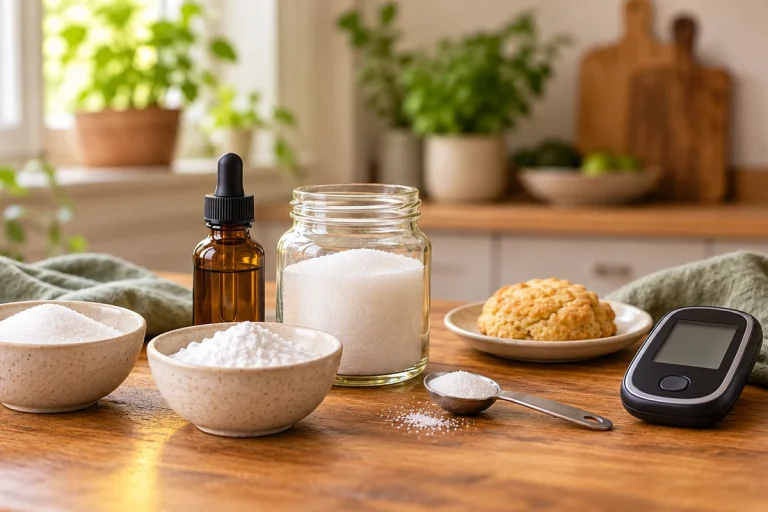
Sugar is the one ingredient keto removes completely, and no replacement behaves exactly like it. The practical answer is to match the sweetener to the job: erythritol-based sweeteners for crisp baking, allulose or xylitol for soft and scoopable textures, and pure monk fruit or stevia drops for drinks and sauces.
I learned a lot of what I know about baking with keto sweeteners from Carolyn Ketchum of All Day I Dream About Food. She is truly the queen of keto desserts, and her guidance saved me from making a lot of potentially expensive mistakes when I first started keto.
Companion article: this guide is about cooking and baking. The blood sugar research, how to count carbs from sugar alcohols and the safety side are in Keto Sweeteners and Blood Sugar: What to Count and What the Research Says.
The sweeteners at a glance
There is no single best keto sweetener. Aftertaste, gut reaction, blood sugar response and even allergy differ from person to person, so the right choice is the one that works for your body. Four things decide it: how sweet it is, whether it has bulk and texture, what it does to your blood glucose, and how your gut tolerates it.
| Sweetener | Sweetness compared with sugar | Pros | Cons |
|---|---|---|---|
| Erythritol | about 70% | Crisps, browns and whips like sugar. Best for snappy cookies, meringue and pavlova. Rarely upsets the gut. | Cooling taste. Recrystallises as it cools, so custards, sauces and ice cream turn gritty or hard. Can dry out low-fat bakes. Heart-risk research is unresolved. |
| Allulose | about 70% | Closest taste to sugar. Caramelises, keeps cakes tender and sauces soft, dissolves for syrups and cold drinks. | Never crisps and over-browns. Costs more. Large amounts can cause digestive upset, so start small. Only approved for sale in Australia since August 2024. |
| Xylitol | about 100% | Stays soft and does not recrystallise. Suits curd, jam, ice cream and condensed milk. | Laxative in larger amounts. Meringue stays gooey. Highly toxic to dogs. |
| Monk fruit (pure) | 100 to 300 times | Zero carb. Drops or powder suit coffee, cocktails, sauces and ketchup. | No bulk, so nearly every granular product is a blend, usually mostly erythritol. Easy to overdo and gritty in cookies. |
| Stevia (pure) | Hundreds of times | Zero carb. Liquid drops come in flavours for coffee, yoghurt and custard. | Bitter or metallic edge for many people. No bulk. Check for maltodextrin or dextrose fillers. |
| Inulin | Mildly sweet | Adds creaminess to yoghurt, mousse and chocolate. The one keto sweetener that can feed yeast. | Bloating and gas in large amounts. Will not caramelise or set hard. |
| Maltitol | 75 to 90% | Tastes very close to sugar. | Not keto-friendly. Raises blood glucose (glycaemic index about 35), and laxative. |
| Fibre syrups (isomalto-oligosaccharide) | Varies | Thick like glucose syrup. Suits caramel, fudge and bars. | Isomalto-oligosaccharide syrups raised blood glucose in a small trial. Count them as carbohydrate. |
| Aspartame, sucralose, saccharin | Very high | Zero carb, zero calorie. | No bulk and often padded with maltodextrin. Carolyn Ketchum avoids sucralose. |
Many products sold as “monk fruit sweetener” are mostly erythritol and behave like it in the oven, so read the ingredient list. For what each one does to blood sugar, and how to count them, see the companion article.
Which sweetener for which job
Decide the texture first, then pick the sweetener.
| Job | Use | Avoid | Why |
|---|---|---|---|
| Crisp cookies | Erythritol-based (Swerve, Lakanto, So Nourished) | Allulose, xylitol | They make cookies soft and cakey |
| Soft, chewy cookies and dough | Allulose, or keto brown sugar | Stevia, monk fruit alone | Stevia tastes bitter and monk fruit goes gritty |
| Cakes and muffins | Allulose or a bulk blend | Pure stevia or monk fruit | Bulk keeps the crumb tender |
| Frosting and icing | Powdered allulose or powdered erythritol | Stevia | Frosting needs bulk; stevia goes grainy |
| Meringue and pavlova | Powdered erythritol or an erythritol and monk fruit blend | Xylitol, allulose | They turn chewy and will not crisp |
| Ice cream | Half erythritol, half allulose or xylitol | All erythritol or all xylitol | Erythritol alone freezes rock hard; xylitol alone stays soft-serve |
| Caramel, jam, curd, sauces | Allulose or xylitol | Erythritol alone | It recrystallises into glassy shards |
| Chocolate | Allulose or xylitol with inulin, plus a pinch of pure monk fruit | Granular erythritol | It recrystallises, though powdered is an acceptable fallback |
| Drinks and cocktails | Allulose simple syrup, liquid sweetener or drops | Granular erythritol or monk fruit in cold water | They do not dissolve in cold water |
| Bars and granola | Allulose-based syrup | Erythritol or monk fruit syrups | Allulose syrup binds better |
| Ketchup and barbecue sauce | Keto brown sugar substitute or allulose | Stevia | Bitter, and erythritol can crystallise |
| Yeast bread | Inulin | Erythritol, allulose | They do not feed yeast |
Three habits make all of this easier:
- Use blends deliberately. Most brands blend two or more sweeteners, which lifts sweetness and masks aftertaste. Mixing erythritol with allulose balances crispness against softness.
- Powder it yourself. Blitz granulated sweetener in a high-speed blender for powdered sugar and keep it airtight. Allulose gives the fluffiest result.
- Adjust the amount. Erythritol and allulose are each about 70% as sweet, so expect roughly 1⅓ cups for every cup of sugar.
What is in my pantry
My own approach is still evolving, so here is where I stand today.
- Lakanto monk fruit is my go-to for baking. It bonds monk fruit to erythritol, so its bulk comes from the erythritol. That means it browns and crisps like erythritol, and the erythritol questions in the companion article apply to it too.
- I am still experimenting with allulose. It was not permitted for sale in Australia as a novel food until Food Standards Australia New Zealand approved it in August 2024, so I am testing it in different recipes.
- Xylitol stays in the pantry for specific recipes and testing only. It is not in regular rotation, and I would rather not use it because it is highly toxic to dogs.
Before you start
A few things worth knowing before you start swapping. The reasons, and the research behind them, are in Keto Sweeteners and Blood Sugar: What to Count and What the Research Says.
- “Sugar free” does not mean “no carbs”. Maltitol, isomalto-oligosaccharide syrups and packet sweeteners made with dextrose or maltodextrin can all still raise your blood glucose. The front of the pack is marketing. The ingredient list is where the truth lives.
- When in doubt, count it. Erythritol can come off your carb count and allulose counts as zero, but I would rather overestimate than get a nasty surprise.
- Build up slowly. Sugar alcohols and allulose can cause gas and diarrhoea, and everyone’s limit is different. Find yours at home, not at someone else’s dinner party.
- Talk to your doctor or dietitian first if you take insulin, a sulfonylurea or a sodium-glucose cotransporter 2 inhibitor (a type of diabetes medicine), have diabetes or kidney disease, are pregnant, or have had an eating disorder. And if a dog shares your home, keep xylitol well out of reach.
Bottom line: a practical keto pantry
If I had to boil my pantry down, four things cover nearly every job in a keto kitchen:
- Erythritol-based granulated and powdered sweetener for crisp cookies, meringue and pavlova.
- Allulose (granulated and syrup) for cakes, caramel, glazes, syrups, cold drinks and soft cookies. Start with small amounts and work up.
- A brown sugar substitute for cookies, sauces and ketchup, where you want that caramel note.
- Pure monk fruit or stevia drops for coffee, tea and a pinch of extra sweetness. Check the label for fillers.
I would skip maltitol, isomalto-oligosaccharide syrups and sucralose. Xylitol only earns a spot if no dog can get near it, which is why mine is kept for specific recipes and testing.
Expect a few flat cookies and the odd gritty custard while you work out what suits you. Carolyn Ketchum saved me from a lot of those, and I hope this saves you a few too.
This is general nutrition information, not advice tailored to you. If you have diabetes or heart disease, or take medication, check with your doctor or an accredited practising dietitian before changing how much sweetener you use.