The gut-brain axis has become one of those wellness phrases that gets attached to everything from yoghurt to “mood-boosting” gummies. Underneath the marketing, though, there’s some genuinely fascinating science. And as someone living with chronic pain, anything that mentions inflammation gets my attention.
So here’s my nutrition-nerd take. What we actually know, what’s still hype, and what’s worth doing when you don’t have many spoons to spare.
What is the gut-brain axis?
It’s the two-way communication system between your digestive tract and your brain. Messages travel in both directions, which is why stress can upset your stomach and an upset stomach can make you feel lousy all over.
There are a few main channels:
- Nerves. Your gut has its own network of hundreds of millions of neurons, called the enteric nervous system. It’s sometimes nicknamed the “second brain”. The vagus nerve is the main phone line between the gut and the brain, and most of the traffic actually runs from gut to brain rather than the other way.
- Chemical messengers. Your gut makes hormones that tell your brain when you’re hungry or full. It also makes neurotransmitters, including about 90% of your body’s serotonin.
- The immune system. A large share of your immune cells live in and around the gut, and the signals they send affect inflammation throughout the body, including the brain.
- Your gut bacteria. Trillions of microbes break down food you can’t, especially fibre. In the process they produce compounds called short-chain fatty acids, which feed the cells lining your gut and seem to calm inflammation.
What the evidence says, and where it’s still hype
This is where I have to be the fun police for a minute.
The serotonin thing is real, but it doesn’t mean what Instagram says it means. Yes, most of your body’s serotonin is made in the gut. But gut serotonin mostly runs your gut: how things move along, and how sensitive it feels. It doesn’t cross into the brain, so “90% of your happy chemical comes from your gut” isn’t accurate.
The links to mood are interesting, but early. A lot of the striking findings come from mouse studies. In people, the research mostly shows that certain gut bacteria patterns are associated with anxiety or depression. That isn’t the same as showing they cause them, or that changing your bacteria will fix them. Trials of “mood” probiotics have had mixed results.
The stress-to-gut direction is well established. Stress changes how your gut moves, how sensitive it is and how much it leaks. That’s one reason gut-directed therapies like hypnotherapy have good evidence for irritable bowel syndrome.
Pain is the part I’m watching closely. Because the gut and immune system are so tightly linked, researchers are looking at whether gut bacteria play a role in chronic pain. One 2019 study found people with fibromyalgia had different gut bacteria from people without it. It’s genuinely interesting, but still very early, and nowhere near ready for anyone to sell you a “pain probiotic”.
What’s actually worth doing
The good news is that the things with the best evidence for gut health are fairly unexciting. And most of them can be done on low spoons.
1. Feed your gut bacteria fibre
Fibre is the main food for your gut microbes. Australian adults are advised to aim for about 25 g a day for women and 30 g for men, and most of us fall short.
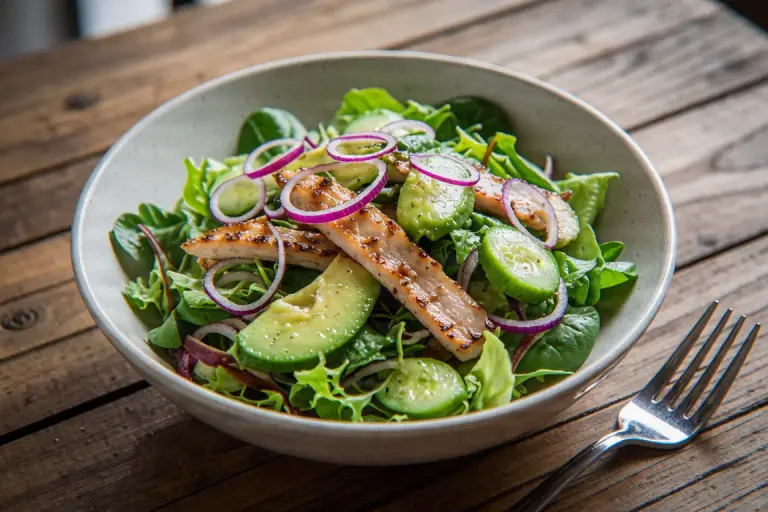
On keto or low carb, fibre takes a bit more thought, but it’s very doable. Low-carb veg, avocado, nuts, chia seeds and linseed all help. Frozen veg counts just as much as fresh. If you want a gentle way in, our Veggie Power Challenge is about adding one extra serve a day, the low-spoon way.
2. Add fermented foods
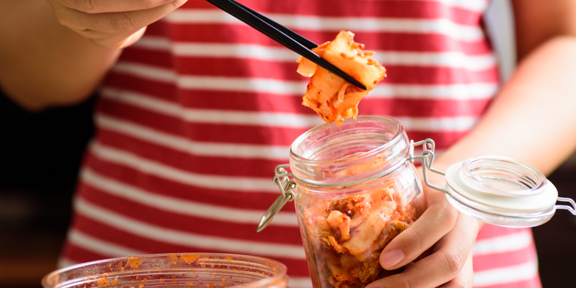
Fermented foods are one of the more exciting areas of research. In a 2021 Stanford study, people who ate around six serves of fermented foods a day for 10 weeks ended up with more diverse gut bacteria and lower markers of inflammation. Ten weeks is short, and it was a small study, but it’s a promising result.
The low-spoon version: a spoonful of sauerkraut or kimchi straight from the jar, plain Greek yoghurt, or kefir. None of it needs cooking. Check the label says “live” or “unpasteurised” if you’re after the bacteria, because shelf-stable versions have usually been heat-treated.
3. Look after your sleep, as best you can
Sleep and gut health affect each other, and adults are generally advised to get 7–9 hours. I’m very aware that “just sleep more” is useless advice when pain wakes you at 3 am. So aim for what you can influence: a regular wake time, less alcohol close to bed (here’s what alcohol does to sleep and pain), and eating dinner a bit earlier when you can.
4. Calm the stress signal
Since stress travels down to the gut, anything that lowers it helps from the top end. Breathing exercises, gentle movement, time outside, or a guided relaxation track all count. None of them needs to be a full yoga class. A few minutes counts.
5. Eat oily fish (and other omega-3s)
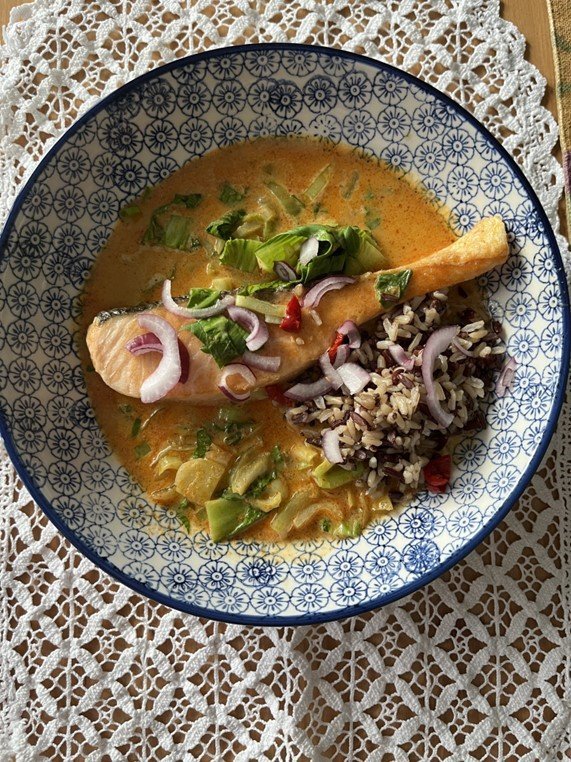
Oily fish like salmon, sardines and mackerel give you the long-chain omega-3s, EPA and DHA. These are important for the brain and help keep inflammation in check. Walnuts, chia and linseed contain a plant omega-3 too, but the body only converts a small amount of it into the forms the brain uses. So fish, or a supplement if you don’t eat fish, does the heavy lifting.
Tinned salmon and sardines are about as low-spoon as omega-3s get. When you have a few more spoons, try our Quick Thai Red Salmon Curry or Orange Ginger Baked Salmon.
6. Drink enough water
Fibre works best with fluid. Without enough water, more fibre can leave you feeling blocked up rather than better. Not sure how much you need? Our Fluid Intake Calculator gives you a starting point.
The gut-brain axis, in short
Your gut and brain are in constant conversation, and the science behind that is real and genuinely interesting. What isn’t real (yet) is the idea that a particular gummy, powder or “gut reset” will fix your mood or your pain.
The useful stuff is boring in the best way: fibre, fermented foods, oily fish, water, and whatever sleep and calm you can manage. Pick the one that fits your spoons today. The rest can wait.
Want more tips and recipes? Join our No Spoons Keto & Low Carb Community on Facebook.