I started scrambler therapy for CRPS in 2022, and I’ve shared my progress in a few of the online CRPS community groups since. The same questions come up every time, so I’ve tried to answer them all here. If I’ve missed something, hit me up in the comments.
Update: where I go for scrambler therapy now
When I first wrote this post, I was being treated at Meglio Therapeutics in Noosa, run by Dr Peter Georgius. Peter has since retired. Deb (Deborah Gray), the nurse practitioner who ran the scrambler clinic at Meglio and has treated me since 2022, has set up her own clinic: Scrambler Therapeutics, also in Noosa. I’ve followed her there.
For how my treatment looks these days, read my latest scrambler therapy update.
Scrambler was me rediscovering hope
When I found scrambler therapy, I was at the end of my rope. I’d just finished another round of lignocaine infusions, and they’d stopped working. The pain specialist I was seeing at the time decided my pain was psychological when I declined to explore invasive surgical interventions. (I’ve written more about that kind of experience in medical gaslighting: signs, examples and how to speak up.)
I was in a really dark place. The infusions had given me about six months of relief. When the last round didn’t work, I felt broken. It’s almost impossible to describe to someone who doesn’t live with chronic pain. To feel relief, then have it stop working and watch the pain take over your life again, is soul destroying.
The one valid point Pain Specialist #3 made was that I needed different support. They certainly weren’t it.
Back then, the online information about CRPS treatment all said much the same thing: medications, physio, nerve blocks, spinal cord stimulators, and psychological support to help with acceptance. In fairness, it hasn’t moved on much since, but it is getting better.
If you want current, real-world information about what’s helping people, the online support groups are the place to be. I kept seeing Americans talk about Calmare therapy, so I started poking around to find out more, and whether it was available in Australia.
Calmare or scrambler therapy?
As it turns out, they’re the same thing. “Calmare” is the name used in North America. Everywhere else, it’s scrambler therapy.
In 2022 there was very little information online. Even the clinics offering it didn’t say much about the process, side effects or costs. Most of what I learned came from other people with CRPS in private online groups.
What is scrambler therapy?
Scrambler therapy is a non-invasive pain treatment. It’s a type of neuromodulation, which means it works by changing nerve signalling. It was developed in Italy by Professor Giuseppe Marineo.
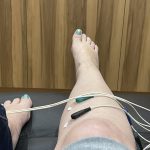
Electrodes are placed on your skin around the painful area, and the machine sends small electrical signals through them. The idea is that these signals carry “no pain” information along the same nerve pathways your pain travels on. Over a course of sessions, that’s meant to help retrain how your brain reads signals from that area.
Treatment is given as a series of sessions, adjusted for each person.
Here’s my nutrition-nerd honesty bit. The research so far is mostly small studies and case series, across neuropathic pain, CRPS, chemotherapy-induced peripheral neuropathy and persistent pain after spinal surgery. Many of the results are encouraging. But there aren’t many large, high-quality trials yet, and it doesn’t work for everyone.
For me, though, scrambler therapy changed the whole story of my CRPS. I got my pain under control. I got my mobility back. I got my quality of life back. And I found hope again.
Who offers scrambler therapy?
There are very few trained clinicians offering it, in Australia or anywhere else. If you’re keen to explore it, ask in the online CRPS groups which clinics are currently offering it.
I’m lucky to have a scrambler clinic in Noosa. I started at Meglio Therapeutics with Dr Peter Georgius and his team, who took an integrative approach to pain management, not just drugs and invasive procedures. Peter’s search for better options is what led him to start a scrambler clinic in the first place.
Deb was the nurse practitioner running that scrambler clinic, and she is an absolute angel. Since Peter retired, she’s opened her own clinic, Scrambler Therapeutics, in Noosa. The new rooms are gorgeous and genuinely tranquil.
I can’t recommend Deb highly enough. It’s well worth the trip to Noosa, and there are few places more beautiful and peaceful than the Sunny Coast. There’s plenty of food and accommodation to suit most budgets.
What to expect
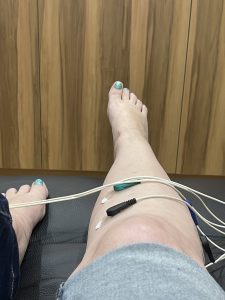
It’s not in a hospital. There are no drugs or anaesthetic. It doesn’t hurt.
Before you book your first block of treatment, Deb does an initial phone consult with you, and she gave me some reading to do beforehand. I still vividly remember that first call. I think Deb heard the desperation and apprehension in my voice. She was incredibly patient, and she answered every single one of my questions (I had dozens). I finished that call feeling heard, and hopeful for the first time in a long time.
When I started, the first block of treatment ran over two weeks, which is the recommended protocol: Monday to Friday, a break over the weekend, then Monday to Friday again.
Each session takes about an hour, with around 40 minutes of actual treatment.
At the start of each session, Deb takes a baseline pain score and talks through the plan for that session. You get comfy in a recliner chair, Deb places the electrodes on the agreed spots, and the machine goes on.
At first, Deb controlled the intensity, turning it up or down based on my feedback. By the second week, I was driving the intensity myself.
What does it feel like?
It feels a bit like a TENS machine. But scrambler isn’t TENS. It’s a different type of treatment, with different signals.
I’ve never found it painful. Sometimes one or two of the leads have felt a bit spicy, so they’ve been moved or turned down. The idea is to retrain how your brain reads the area, not to inflict more pain. As Deb says, your brain just needs to find it interesting. It doesn’t have to be full blast for that to happen.
After a session, I tend to feel a bit dopey, sleepy and absolutely ravenous. There’s something amazingly satisfying about eating after a session, and there’s never a shortage of good cafes nearby.
When do you notice a difference?
During my first week, I noticed a change from day to day. Mostly I just wanted to eat and sleep after each session, and my sleep quality improved dramatically after the very first one.
By that first weekend, I felt supercharged. A girlfriend came up for a girls’ weekend, and I managed to walk around all weekend without being floored by pain. It was liberating.
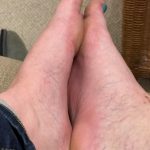
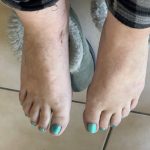
By the end of the second week, my pain had come down significantly. The burning was now very much in the background. When I started, I would happily have cut my foot off if it meant the burning and tingling would stop.
It’s different for everyone. Deb’s view is that people who are more hands-on with their treatment, and drive the intensity themselves, can get a more dramatic result, possibly because of a stronger feedback loop with the brain. That’s a theory rather than something that’s been proven, but it matched my experience.
How long does scrambler therapy for CRPS last?
I had about four months between my first round and my first booster. That booster was a five-day block, and it brought my pain baseline down another few points. During that booster, I walked on sand for the first time since my accident.
Between my second and third treatment blocks, I got COVID, and it wrecked my pain baseline completely. The CRPS started spreading up into my hip, and I was majorly freaking out that I’d lose my mobility altogether. Within one session, the spread was gone. The next four sessions focused on stabilising my baseline again, and they did.
Between blocks three and four, I thought I’d give influenza A a spin. I do not recommend it. Just like COVID, it wrecked my pain baseline. Thankfully, three booster sessions reset it.
At one point I went more than six months between boosters. By the end of that stretch, I could feel I was due: the tingling was getting stronger, my gait was shifting, and I was getting more tentative with walking. But in those six-plus months, I’d moved house, started renovations, painted fences and planted gardens. If you’d suggested any of that to me in 2022, I would have flared at the thought.
Have I still had flare-ups? Sure. Scrambler hasn’t been a cure for me. I’ve heard of some people going into remission, but I have type 2 CRPS, and I’m realistic about cures. What it has done is reduce how bad my flare-ups get and how long they last, and I notice improvements after each booster.
These days, my top-ups are a single day: a morning session and an afternoon session, roughly every three months. Deb and I review my whole care plan while I’m there. There’s more on how that works in my latest scrambler update.
The biggest thing CRPS has taught me is that pain management isn’t one thing. It’s a combination of diet, movement and the treatments you choose. (Food is a big part of mine, and I’ve written about why keto helps with my pain management.) Shifting my thinking from hunting for the silver bullet to asking what can reduce my pain has saved my sanity.
How much does it cost?
For me, the most expensive part is accommodation. Noosa is not the cheapest place to stay, so I strongly recommend booking outside peak season if you can. Somewhere you can self-cater helps keep costs down, and there are often good deals on Airbnb off-peak. When I started, the clinic had a fixed-price arrangement with Macquarie Lodge, a peaceful self-contained apartment complex around the corner, so ask Deb whether there’s a current accommodation arrangement.
Scrambler sessions are $500 per session. Prices may well have changed since, so check the current fees with Scrambler Therapeutics directly. You don’t need to be an existing pain patient to have scrambler therapy, but you will need a referral from your GP or specialist.
I’ve said it before: my health insurance sucks, and it didn’t cover a cent. Some people have managed to get at least part of their accommodation covered.
A friend of mine had their sessions and some expenses covered through DVA, and I’ve been told some interstate WorkCover schemes cover part of the cost too. Funding seems to be a moving feast, so ask about it in your initial phone consult.