Yes, a splash of cow’s milk fits on keto. It’s about 1 g of carbs in your coffee, but around 12 g in a glass. Cream is lower again, and unsweetened almond or coconut mylks can be very low carb, depending on the brand.
Then there’s the plant-based aisle, where “mylk” can mean anything from almonds and water to a long list of oils, gums and rice syrup. So I went through the dairy fridge and the long-life aisle and read the labels, so you don’t have to stand there doing it.
The quick answer
- A splash of cow’s milk in your coffee is about 1 g of carbs. Most people on keto can fit that in. A splash, not a milk drink with a coffee garnish.
- A glass of cow’s milk is around 12 g of carbs, which is a big chunk of a strict keto day.
- Cream is the lowest-carb dairy option, at roughly 3 g per 100 mL.
- Unsweetened almond and coconut milks can be very low carb, but it depends entirely on the brand.
- Oat milk is generally too high in carbs for keto.
The details are below, along with the brands I’d buy and the ones I’d put back on the shelf.
Can you drink milk on keto?
On a strict keto plan, a glass of milk usually doesn’t fit. On a more relaxed low carb approach, it can, depending on your daily carbs and how you tolerate lactose. Not sure which camp you’re in? Our guide to keto vs low carb explains the difference.
Where are the carbs in milk?
Almost all of the carbohydrate in cow’s milk is lactose, a milk sugar made of two simpler sugars, glucose and galactose. There are small amounts of other carbs, but lactose does the heavy lifting.
Full cream Australian milk has roughly 4.5–5 g of carbs per 100 mL, so about 12 g in a 250 mL glass. It also has about 8–9 g each of protein and fat per glass. Most people asking about milk on keto mean milk in their coffee, though, and a 20 mL splash is only about 1 g of carbs. The coffee is doing the heavy lifting. The milk has a one-gram speaking part.
Milk is also a good source of protein, calcium, vitamin B12 and riboflavin. Most of us who grew up in Australia were told to drink our milk for strong bones, and the Australian Dietary Guidelines still recommend 2½–4 serves of dairy or alternatives a day, depending on your age and sex, largely for calcium.
So milk on keto or low carb is a personal choice. It comes down to your carb target, your gut and why you’re on your journey.
“But milk is inflammatory”
That’s a different question from whether it’s keto, but it comes up a lot on low inflammatory and low carb diets.
Milk isn’t inherently inflammatory for everyone. Some people react badly to it for a few different reasons, and they’re worth separating out:
- Lactose intolerance. Some people don’t make enough lactase, the enzyme that breaks down lactose. The result is bloating, wind and diarrhoea. That’s a digestion problem rather than inflammation, but it can feel similar.
- Milk allergy. This is an immune reaction to milk proteins such as casein or whey. Symptoms range from hives and gut upset to anaphylaxis. This is a genuine immune response and needs medical advice.
- A1 protein sensitivity. Some people report fewer gut symptoms with A2 milk (more on that below). The research is small and mixed, so treat it as “worth trying if you’re curious” rather than settled.
- Hormones and growth factors. Milk naturally contains these, because it’s designed to grow a calf. You’ll see plenty of claims about their effects on adults, but the evidence is thin, so I’d file this under “unproven”.
Is A2 milk better for you?
A2 milk arrived in the early 2000s. Regular milk contains two types of a protein called beta-casein, A1 and A2. A2 milk contains only the A2 type, and the marketing says that makes it easier to digest. A few small studies suggest some people get fewer gut symptoms, but the evidence is nowhere near as strong as the advertising.
Personally, I’ve never noticed a difference. A2 milk has exactly the same lactose as regular milk, and lactose is my problem. I still get bloated, and too much lactose can set off my reflux.
What is “keto milk”?
Ask ten keto people what keto milk is and you’ll get two camps. One says it means plant-based milk. The other makes it by watering down thickened cream.
Cream-based keto milk isn’t strictly lactose free. Cream still contains a little lactose, just much less than milk or yoghurt. I tolerate it better than milk, but I got out of the habit of drinking milk as a kid. And honestly, if I want cream, I want cream, not a watered-down version of it.
Cow’s milk is never actually in my fridge, so when friends come over, I make their coffees and cappuccinos with watered-down cream. It froths up like regular milk, and nobody has noticed yet. Anyone who’s had a coffee at my place: surprise. It also works well in baking.
Cream isn’t always just cream
This is enough to piss off the Pope. Even buying cream can turn into a label-reading mission. Here’s what was on the shelf when I checked. Products get reformulated, so check the pack if it matters to you.
- Good pick: Woolworths Thickened Cream. 35% milk fat, thickened with beef gelatine, so it’s not vegetarian. Gelatine is a protein that’s particularly high in glycine and proline. Per 100 mL: 3.4 g carbs, 35.6 g fat, 2.3 g protein.
- Not for me: Woolworths Light Thickened Cream. Vegetarian, made from skimmed milk and cream with carrageenan and guar gum, and 18% milk fat. My rule of thumb is that I don’t buy “light” dairy. On keto and low carb I want the fat, and taking fat out leaves proportionally more carbs.
- Good pick: Coles Thickened Cream. Vegetarian. Pasteurised cream with thickeners 407 (carrageenan) and 412 (guar gum). Per 100 mL: 3.1 g carbs, 35 g fat, 2.1 g protein.
- Good pick: Bulla Thickened Cream. Vegetarian. Milk with carrageenan and guar gum, at 35% milk fat. Per 100 mL: 2.9 g carbs, 35.6 g fat, 2.3 g protein.
- Skip: Bulla Cooking Cream. Reduced-fat cream with thickeners, an emulsifier and mineral salts. 472e is an emulsifier made from glycerol and tartaric acid. 1422 is a modified starch used as a thickener. I’ve never understood the need for cooking cream. Yes, it doesn’t split, but neither does regular cream if you heat it gently.
- Best pick: Dairy Farmers Pure Cream. Just pasteurised cream. Per 100 mL: 3.1 g carbs, 35 g fat, 2.1 g protein. (Their thickened cream adds mineral salts and thickener 400, alginate from seaweed.)
Scanning labels in the dairy fridge isn’t a great use of spoons. I use the Yuka app to check most of this from the couch, usually with a coffee in the other hand, before I shop.
Not all plant-based milks are keto either
Once you start reading the backs of cartons, you quickly learn that “plant-based” doesn’t automatically mean better. A large number of milk alternatives contain a huge amount of crap we shouldn’t be eating anyway, and some carry enough sugar to blow your carbs in a single glass. If you want the bigger picture on additives, I’ve written about what ultra-processed food actually means.
Is almond milk keto friendly?
Yes, but it depends heavily on the brand. Always check that it says unsweetened.
- Skip: Australia’s Own Unsweetened Almond Milk. Only 3% almonds, plus sunflower oil. Why? Put it back on the shelf.
- Best pick: J*st Milk Almond. Their marketing says it all: you shouldn’t have to spend 20 minutes reading a label to work out whether almond milk is almond milk. This is almonds (6%) and water, with 0.4 g carbs per 100 mL.
- Skip: Pureharvest Organic Almond. It does contain 10% organic activated almonds, but it’s sweetened with rice syrup, which takes it to 5.9 g carbs per 100 mL.
- Okay: So Good High Protein Almond. Almonds (4%), soy protein (3.5%), calcium, gellan gum, vitamin C as an antioxidant, and B vitamins. The soy lifts the protein to 10 g per serve, at 0.3 g carbs per 100 mL. Gellan gum is vegetarian and made by bacterial fermentation.
- Okay: Vitasoy Prebiotic Almond Milk. Almonds (at least 3.8%), chicory root fibre, calcium phosphate, sunflower lecithin, sea salt, natural flavour and gellan gum.
Is coconut milk keto friendly?
Again, yes, but it depends on the brand. Coconut milk can come with an infuriating number of additives. It’s still my preferred plant-based milk.
Coconut cream vs coconut milk: coconut cream is thicker, richer and higher in fat, because it has more coconut solids. Coconut milk is thinner and lighter. You can use coconut cream in place of coconut milk (thin it with a little water), but recipes that need cream won’t always work with milk. You’ll find tins of both with the Asian ingredients, and coconut milk in 1 L cartons with the long-life milks.
- Good pick: Woolworths Essentials Coconut Milk (tin). Coconut extract (50%), water and guar gum.
- Best pick: Ayam Coconut Milk (tin). Coconut kernel extract (89%) and water. That’s it.
- Good pick: Australia’s Own Unsweetened Coconut Milk (carton). Water, organic coconut cream (at least 7.5%), salt, and vegetable gums (locust bean, sodium alginate and guar).
- Okay: Macro Organic Coconut Milk Unsweetened (carton). Water, organic coconut milk (12%), organic brown rice, calcium carbonate and sea salt. The rice pushes it to 6.6 g carbs per 100 mL.
- Good pick: Coles Unsweetened Coconut Milk (carton). Water, coconut cream (8%), sea salt, and vegetable gums (locust bean, sodium alginate and guar).
Other brands are around, so it’s worth reading labels. Many add ingredients that push the carbs up without adding anything useful. Also worth knowing: most coconut comes from Southeast Asia. Even “Made in Australia from at least 92% Australian ingredients” usually means the coconut part was imported.
Tinned coconut cream is the base of a few of our recipes, like the Quick Thai Red Salmon Curry, and carton coconut milk goes into our Blueberry Protein Smoothie and our spinach blueberry smoothie.
Is oat milk keto friendly?
Generally, no. Oat milk is made from a grain, so it’s naturally higher in carbs. Most cartons have 8–12 g per 100 mL, well above the 5 g per 100 mL rule of thumb I use for keto. It might fit a relaxed low carb day in small amounts.
One more thing if you avoid gluten: oats contain avenin, a protein similar to gluten, and they’re often cross-contaminated with wheat. That’s why oat milk can’t be labelled gluten-free in Australia.
- Skip: Vitasoy Prebiotic Oat Milk. Water, whole oats (at least 15%), chicory root fibre, oat flour, sunflower oil, calcium phosphate and sea salt. Per 100 mL: 11.7 g carbs, 2 g fat, 1 g protein.
- Skip: Australia’s Own Barista Oat Milk. Water, oats (10%), canola or sunflower oil, dipotassium phosphate (an acidity regulator), calcium and salt. Per 100 mL: 8 g carbs, 2.8 g fat, 0.6 g protein.
- Cleanest oat option, still high carb: Macro Organic Oat Milk Unsweetened. Water, organic oats (14%), calcium carbonate and sea salt. Per 100 mL: 8.3 g carbs, under 1 g fat, 1.5 g protein.
- Skip: Coles Organic Unsweetened Oat Milk. Water, organic oats (15%), organic sunflower oil, calcium carbonate and sea salt.
Is hemp milk keto friendly?
I’ve been using hemp milk more over the last year. The taste isn’t for everyone. It’s a bit grassy and nutty. It works well in baking and smoothies.
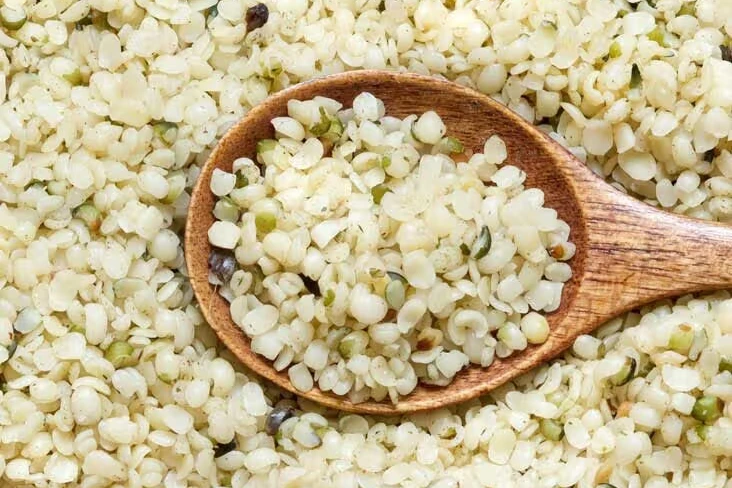
I haven’t seen it readily available in supermarkets, so I make it. You blitz hemp seeds and water in a high-powered blender, then strain it. Nut milk bags are handy, but I just use a clean Chux. Fair warning: that’s a blender to wash and a straining job, so it’s a more-spoons task. Make a batch when you’ve got the energy. Coffee first.
Nutritionally, hemp seeds are impressive. They contain all nine essential amino acids, so hemp milk has more protein than most plant milks. It also brings omega-3 and omega-6 fats, B vitamins and vitamin E.
So which milk should you choose?
For keto, my order of preference is:
- Cream, or watered-down cream.
- Unsweetened coconut or almond milk with a short ingredients list.
- Homemade hemp milk on a more-spoons day.
On low carb, a splash of cow’s milk is fine if lactose agrees with you. Oat milk is the one I’d leave for non-keto days.
Whichever you choose, it’s one of the easier label-reading wins: pick a brand once, then just buy it every week. If you’re working out where milk fits in your day, our quick-start guide to macros and the keto macro calculator can help.