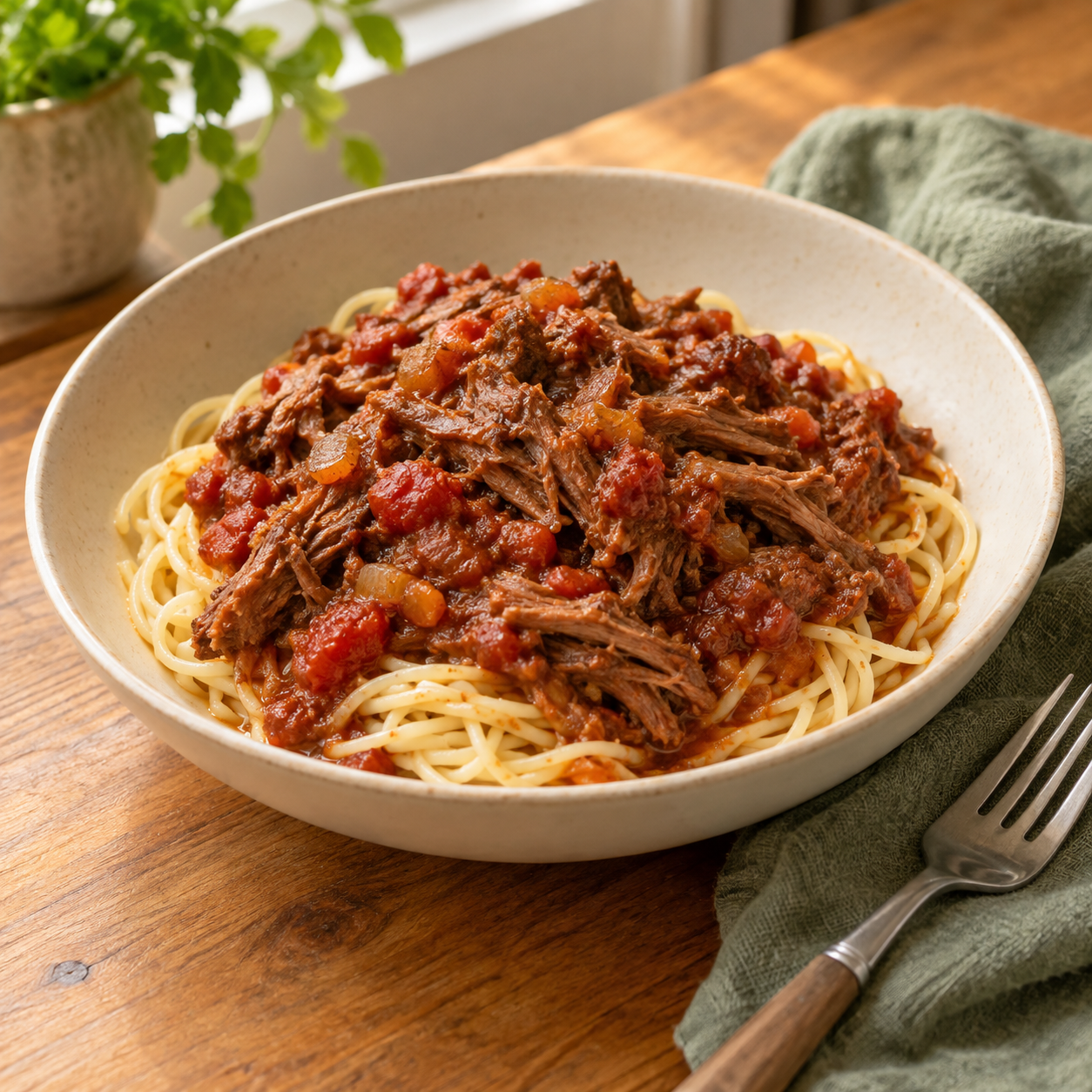
The keto pasta substitutes I use most are konjac, lupin, edamame, heart of palm and zoodles, and each suits a different dish. Pasta is one of the great low-spoon meals, but regular pasta’s carbs don’t fit keto, so here’s what I put under my bolognese instead.
But the carbs are an absolute killer for those of us following a low carb lifestyle.
So I’ve spent a fair bit of time (and, honestly, money) working out what to put under my bolognese instead. Some of it was great. Some of it ended up in the bin. Here’s where I’ve landed.
Why regular pasta doesn’t fit keto
Dried wheat pasta is roughly 70% carbohydrate. That’s around 55–60g of carbs in a normal 80g dry serve. On keto, most people aim for about 20–50g of carbs a day in total. You don’t need a calculator for that one.
I’m also gluten intolerant, so wheat was off the menu for me anyway. When gluten-free pasta first showed up in supermarkets, it cooked like a pot of Clag. I wasn’t keen on tomato-flavoured glue, so I just stopped eating pasta for a long time.
The catch with most gluten-free pasta is that it’s gluten free, not low carb. Rice flour, corn, potato starch and tapioca are all carb-heavy, so a typical serve lands in the same 60–80g range as wheat pasta. Legume pastas (chickpea, red lentil) have more protein and fibre, but they’re usually still too high in carbs for keto. I’ll eat them occasionally if I’m carb cycling. I just plan around them.
If you’ve noticed pain pushing you towards carbs in the first place, I’ve written about that in is pain fuelling your sugar cravings? If you’re still working out whether keto or low carb suits you, this is how we explain the difference.
Clean keto vs dirty keto
You’ll see these terms all over keto communities, and I use them in this post. They’re community shorthand, not clinical terms, so here’s what they mean.
- Clean keto cares about where the macros come from, as well as the numbers. The focus is whole, minimally processed foods. Grains and flours are out entirely, and most people following clean keto also avoid things like seed oils, artificial sweeteners and long lists of additives. In pasta terms, that means swaps that are basically a single whole food: zucchini, konjac, heart of palm.
- Dirty keto focuses on hitting your macros, mainly keeping carbs low, and is much less fussed about ingredients. A processed product is fine if it fits your numbers. In pasta terms, that opens up manufactured products like lupin, edamame and lower carb wheat pastas.
Despite the names, neither is morally better. “Dirty” doesn’t mean bad. It’s about what you’re prioritising. Some people do clean keto because they’re managing inflammation or reacting to certain additives. Others do dirty keto because it’s cheaper, easier and more sustainable when your capacity changes day to day. I sit somewhere in between, and on a flare day I lean dirty without a second thought.
I go deeper into why the ingredients matter for me in why keto helps with pain management. You can see the same clean vs dirty question applied to dairy in milk vs mylk on keto and low carb. If you want the bigger picture on processing, there’s healthy vs highly processed food.
A label-reading tip
Australian nutrition panels already list carbohydrate and dietary fibre separately. The “carbohydrate” figure on an Australian label doesn’t include fibre. So you don’t need to subtract fibre to get “net carbs” the way American keto content tells you to. If you do subtract it, you’ll undercount. There’s more on this in macros made simple, and in my Yuka app review if you’d rather scan the barcode than squint at a curved packet.
I also compare per serve, not per 100g. A pasta that looks great per 100g can look very different once you work out how much you’ll actually eat.
The quick comparison
“Spoons” here means how much energy each option takes. If that’s a new term for you, here’s where it comes from.
| Swap | Spoons to prepare | Clean or dirty keto | Gluten free? | Best with |
|---|---|---|---|---|
| Konjac | 🥄 Open, rinse, heat | Clean | Yes | Asian dishes, soups |
| Heart of palm | 🥄 Rinse and heat | Clean | Yes | Lasagne |
| Zoodles (pre-made) | 🥄 Toss through hot sauce | Clean | Yes | Light sauces |
| Zoodles (from scratch) | 🥄🥄🥄 Spiralise, cook, clean up | Clean | Yes | Light sauces |
| Lupin pasta | 🥄🥄 Boil like normal pasta | Dirty | Yes | Italian, creamy sauces |
| Edamame pasta | 🥄🥄 Boil like normal pasta | Dirty | Yes (contains soy) | Asian dishes, strong tomato sauces |
| Lower carb wheat pasta | 🥄🥄 Boil like normal pasta | Dirty | No | Anything |
Konjac noodles
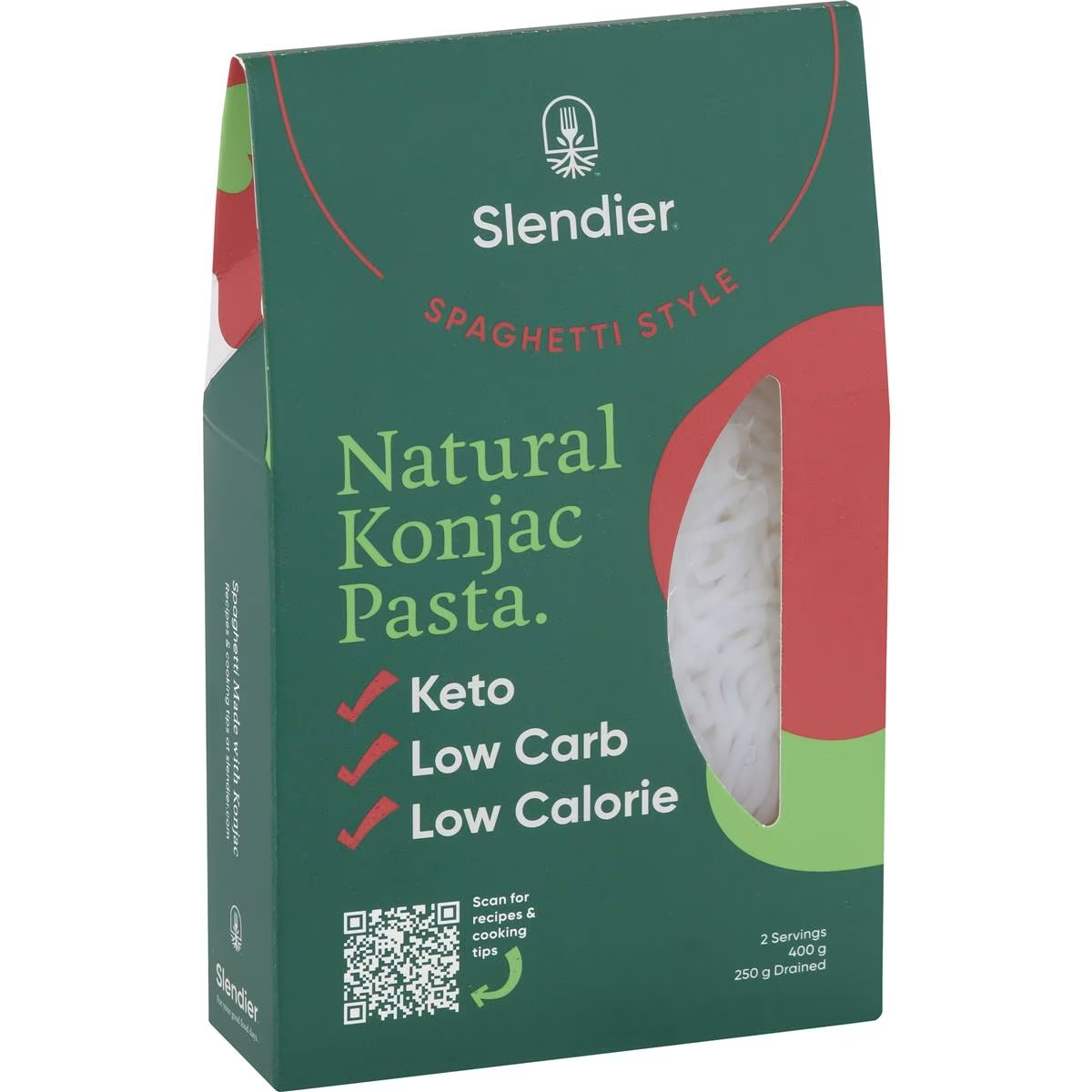
Konjac noodles come from the root of the konjac plant, a relative of elephant foot yam. They’ve been used in Japanese cooking for centuries. The shirataki noodles in sukiyaki and shabu shabu are konjac.
They’re mostly water plus a soluble fibre called glucomannan, so they’re only a couple of grams of carbs per serve. Glucomannan gets a lot of marketing for weight loss, gut health and blood sugar. There is some research behind it, but the evidence is mixed, and most of those studies used glucomannan supplements, not a bowl of noodles. I eat konjac because it’s low carb and easy. I don’t think it’s doing anything magical.
Konjac is a divisive ingredient. I like it in Asian dishes and I’m much less keen on it with Italian sauces. For me that’s about texture. It has almost no flavour of its own, which is both the point and the problem.
From a spoons point of view, though, konjac wins. Open the packet and rinse well under cold water, because the liquid it’s packed in has a smell you don’t want in your dinner. Do this after the coffee. The smell is not a gentle start to the day. Then heat it through the sauce. There’s no boiling and no draining a heavy pot. If you’re using konjac rice, dry-frying it in a hot pan first gets rid of most of that taste. I explain how in the Keto Char Siu recipe.
Slendier is in the pasta aisle at Coles and Woolworths, in spaghetti, fettuccine, noodle, penne and rice styles. I usually buy konjac noodles from the fridge section at Asian grocers instead, where they’re often less than half the price.

Where we use it: Bun Cha Steak Noodle Fusion. Konjac is also one of the pantry staples I talk about in convenience ingredients are accessibility tools.
Lupin pasta
Lupin is a legume that’s naturally very low in carbs and high in protein and fibre, which is a rare combination in the legume world. It also contains useful amounts of iron, potassium and magnesium.
Allergen note: lupin is a declared allergen in Australia, and people with a peanut allergy can also react to it. If peanuts are a problem for you, check with your doctor before trying it.
My favourite is Loka, an Australian lupin brand. Their penne is the closest thing to wheat pasta I’ve found. It holds its shape, works with creamy sauces, and doesn’t taste like a compromise. It’s about $10 a packet for four serves. You can buy direct from Loka, but I usually get it through Low Carb Emporium because their sales and rewards program bring the cost down.
Kaizen is an American lupin pasta with more interesting shapes: fusilli, cavatappi, radiatori and a lupin “rice”. It’s around $15 a packet for four serves. That’s a lot more than Loka, so for me it’s an occasional buy. It’s on iHerb too, but the mark-up there is wild.
Lupin cooks exactly like normal dried pasta. It doesn’t save you any spoons, but it doesn’t cost you any extra either.
Other ways we use lupin: lupin mash with our Slow Cooked Lamb Chops with Garlic and Herbs, and lupin flour as a higher-protein option in Keto Bread in 90 Seconds.
Edamame pasta
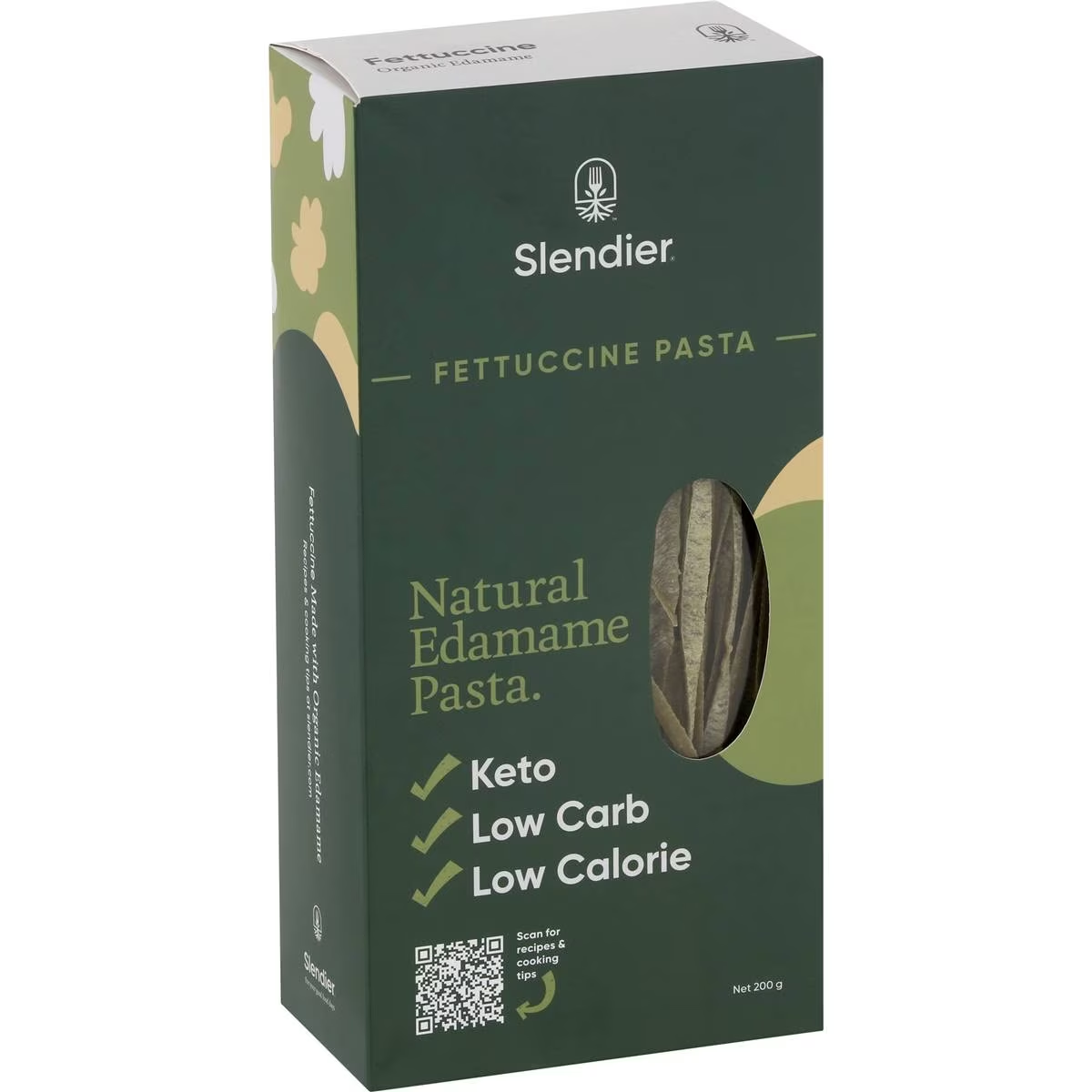
Edamame are young green soybeans. Edamame pasta is high in protein and fibre and much lower in carbs than wheat pasta. It’s obviously not an option if you avoid soy.
There are two brands I’ve tried:
- Slendier edamame spaghetti and fettuccine. Stocked at Coles and Woolworths, around $5 for a 200g packet (about two serves).
- Qetoe edamame spaghetti and fettuccine. Around $6 for 200g. To me, Qetoe tastes noticeably milder than Slendier.
Edamame pasta does taste like edamame: earthy and a bit beany. I think it’s great in Asian dishes and surprisingly good with a strong tomato sauce. With carbonara or anything creamy, it’s terrible, and I won’t be taking questions on that.
Where we use it: Creamy Sesame Chicken Noodle Salad and Orange Ginger Baked Salmon with Edamame and Asian Greens. Qetoe also makes a low carb rice that we use in Thai Pork Salad with Keto Rice, Vegemite Chicken and Basil Stir Fry and Quick Thai Red Salmon Curry.
Heart of palm pasta
Heart of palm is the tender inner core of certain palm trees, usually peach palm or coconut palm. It’s common in Latin American cooking, especially in Brazil. It has a mild, slightly sweet flavour, a bit like artichoke hearts.
It’s naturally gluten free, very low in carbs, and comes ready to use. You just rinse and heat it.
My preferred brand is Palmini, which comes as lasagne sheets, linguine and rice. It’s about $7.50 a packet, with two to three serves. I mostly use the lasagne sheets. They’re soft enough to layer, they don’t need pre-cooking, and nobody at the table has asked what’s wrong with the lasagne.
I haven’t seen it in the major supermarkets, so I buy it online.

Where we use it: Keto Caribbean Beef Bowl, which also has a deeper dive into heart of palm’s nutrition.
Zoodles (zucchini noodles)
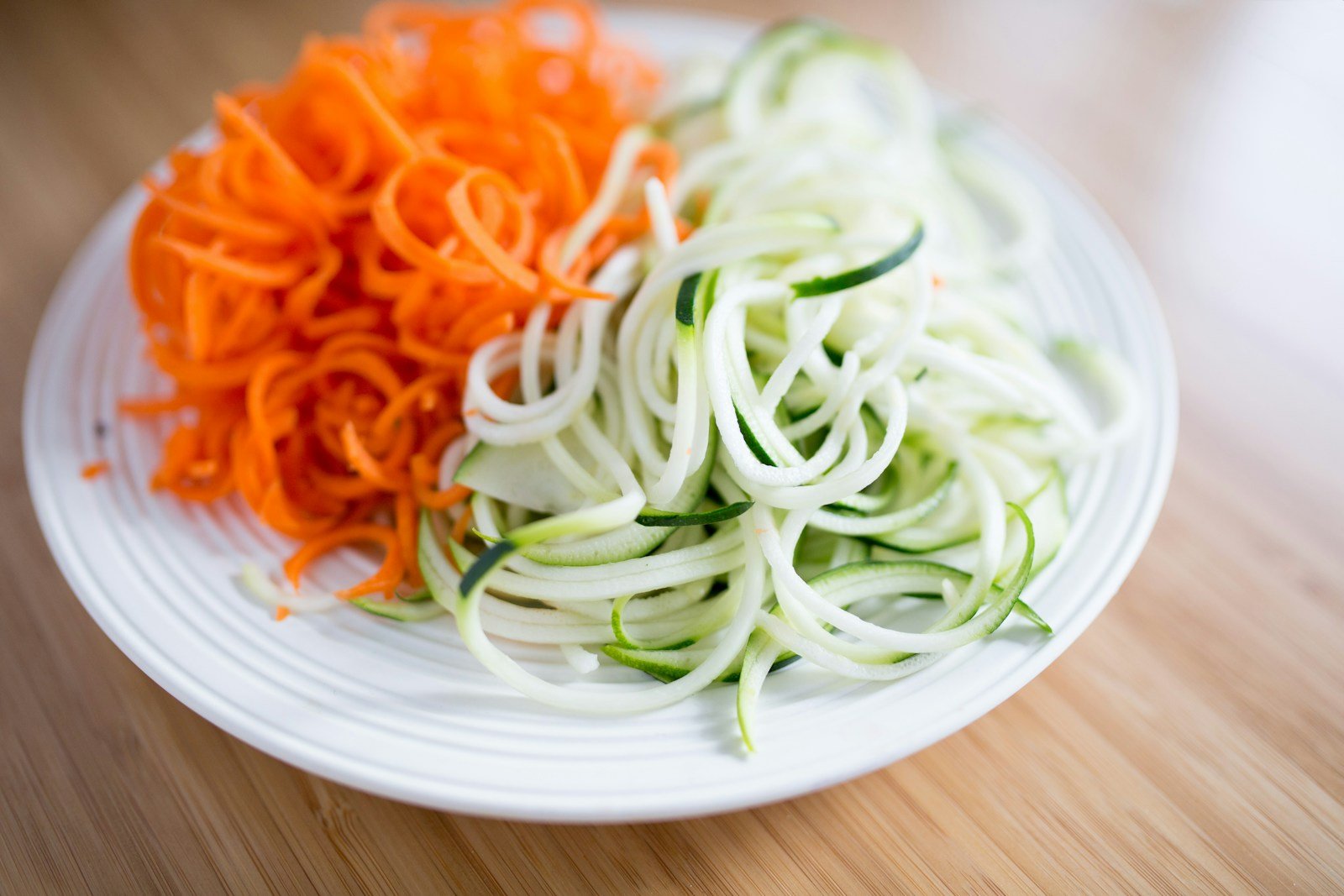
Zoodles are spiralised zucchini. They’re the cheapest option here and the most “it’s just a vegetable”.
The trick is not to cook them. I toss them through the hot sauce just before serving so they stay a bit al dente. If you want them softer, 90 seconds in the microwave is plenty. Any longer and you’ve made zucchini mash.
Some links on this page are affiliate links. If you buy through one, we may earn a small commission at no cost to you. As an Amazon Associate I earn from qualifying purchases.
The spoons reality: making zoodles from scratch means washing, spiralising, and then cleaning a spiraliser, which seems designed to trap zucchini where no sponge can reach. On a good day, a basic spiraliser (affiliate link) is cheap and zucchini is cheapest in summer. On a flare day, I buy them pre-made.
- Woolworths sells fresh zucchini spaghetti in the produce section, about $3 for 250g. That’s two serves in my house.
- Fine Fettle dehydrated zucchini noodles are pantry-stable, which is handy. At around $7 for a single serve, though, they’re a “keep one in the cupboard for emergencies” option, not a regular one.
If you make a big batch, zoodles freeze well in portions as long as you get the water out first. Otherwise they thaw into a puddle. Our zoodles recipe walks through how. I freeze mine in Pyrex Simply Store containers so they go straight from freezer to microwave.
Thinly sliced zucchini also makes good lasagne sheets, and it rolls up nicely for a cannelloni-style dish.
Lower carb wheat pasta
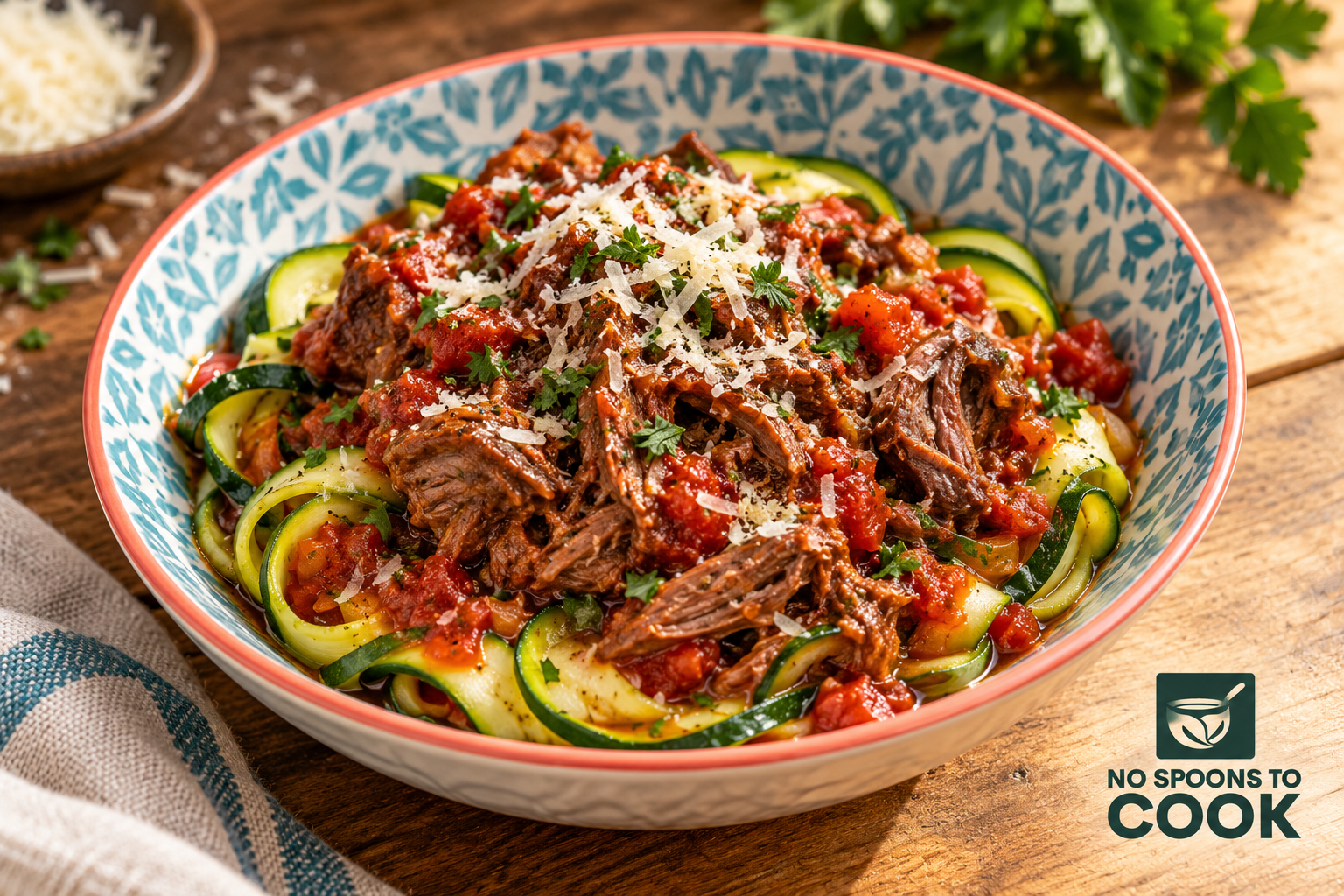
If gluten isn’t an issue for you, there are wheat pastas reformulated to be lower in carbs. Kerry’s Lamb Ragu with Low Carb Pasta uses Herman Brot Lower Carb Pasta. It tastes and cooks very much like regular pasta. It contains wheat and gluten, so it’s a dirty keto option and not one for me. The recipe notes cover Loka and Qetoe as gluten-free swaps.

Low carb wraps as pasta (a hack I have opinions on)
I’ve seen low carb wraps and egg wraps suggested as pasta. As fettuccine, I hate them. They go soggy and take me straight back to the Clag years. As emergency lasagne sheets, they’re fine.
Check the label, though. Most commercial low carb wraps contain wheat gluten, and some egg wraps do too (I know). Some also have additives you may want to avoid if you’re managing inflammation.
So which one should you buy?
It depends on the meal and on how many spoons you have. Here’s what I do:
- Lowest effort: konjac for Asian dishes, and pre-made zoodles or heart of palm for everything else. Open, rinse, heat.
- Closest to real pasta: Loka lupin penne. If you can eat gluten, Herman Brot.
- Cheapest: konjac from the Asian grocer, or zoodles you make yourself in summer if you have the spoons.
- Best for lasagne: Palmini heart of palm sheets.
- Best for Asian noodle dishes: konjac or Qetoe edamame.
- Clean keto: zoodles, konjac, heart of palm.
- Dirty keto: Loka, Qetoe, Herman Brot.
If you want a starting point for how many carbs suit you, our nutrition calculators can help. Shopping is a whole other spoon drain, so we’ve also put together a low spoon grocery shopping guide.
What’s your go-to pasta swap? I’m always happy to have my wallet put at risk by a new recommendation.