- Hands-onabout 12 min
- Choppinga little
- Freezer friendlyNo
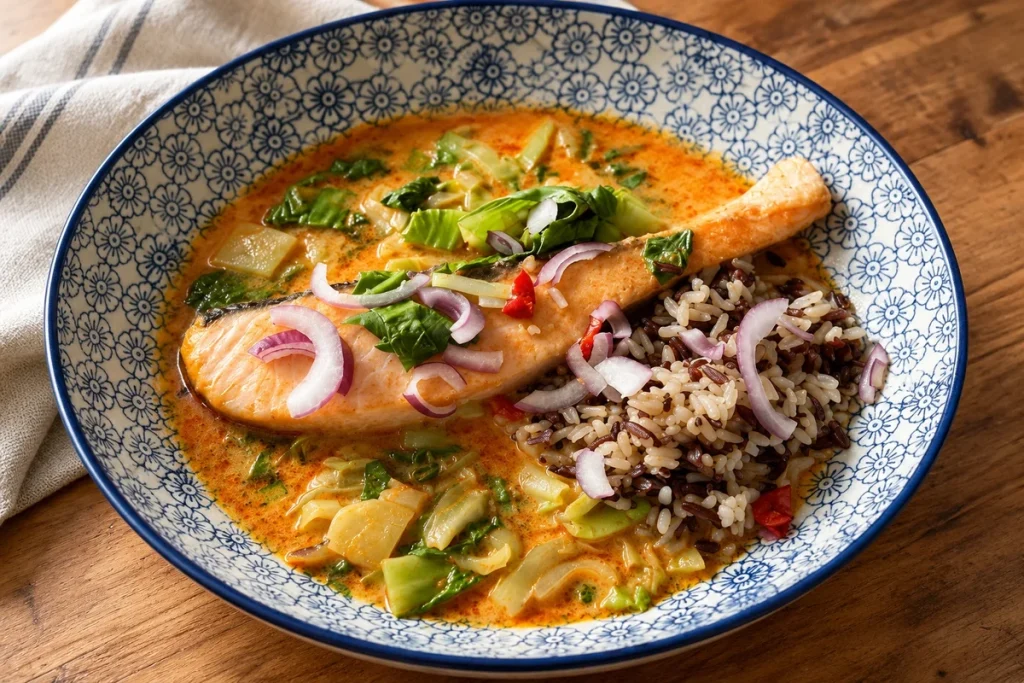
Thai red salmon curry in one frying pan, ready in about 30 minutes. The salmon cooks first and rests under a lid while you make a quick coconut sauce in the same pan. The main shortcut is jarred minced ginger, so there’s no peeling or grating.
Want it easier still? Skip the raw red onion and the chilli on top. You lose a little crunch and heat, and two chopping jobs.
Can I manage this today?
- Spoon level: More Spoons
- Hands-on time: about 12 minutes, plus a short stretch with the lid on
- Main effort: slicing the pak choy, onion and chilli and picking the basil before you turn the heat on
- Chopping: a little. Pak choy, red onion, chilli and basil leaves, and the onion is sliced very finely
- Standing and attention: most of the 20 minutes cooking is at the stove, with the salmon turned once. You can sit to cook if your kitchen allows it.
- Thinking and sensory load: four short cooking stages (salmon, paste, sauce, greens). Red curry paste and fish sauce smell strong while they cook.
- Washing up: one frying pan, one chopping board and the serving bowls, plus a plate for the cooked salmon.
Quick spoon check
There’s no no-spoons version for this one because swapping out the fresh ingredients would change the recipe too much.
- Low-spoon swaps: a ready-made curry sauce, jarred or frozen ginger, microwave rice cups (it will change the macros and increase carbs)
- As written: salmon, quick red curry sauce and pak choy in one pan, about 30 minutes.
Kerry’s notes
The salmon gets cooked twice. It’s four minutes a side in the pan, then two minutes back in the sauce. Don’t give it extra time in the first round. It finishes cooking in the curry.
Fish sauce is salty, so add the amount in the recipe, then taste before adding more. The chilli is yours to adjust. Deseed it and the curry is milder.
Rice is Leigh’s territory. Her Keto vs Low Carb guide has the full rundown, and I’ll be over here with the lime.
Ninja Approved: Marty would pinch a bit of salmon off the plate.
What’s that ingredient?
Pak choy. A leafy Asian green with crisp white stems and soft leaves. The stems go in first because they take longer to soften. Find it in the Asian vegetables section of most supermarkets and at greengrocers. Keep it unwashed in the fridge crisper. Easiest swap: bok choy is the same thing under another spelling. Baby spinach also works, added with the leaves at the end.
Thai basil. Smaller leaves than sweet basil, with an aniseed edge. It’s a finishing herb, so it goes on at the end, not in the pot. Find it in the herb section or at Asian grocers. It blackens in the cold. Keep it loosely wrapped in the crisper door, not at the back of the fridge. Easiest swap: ordinary basil, which is milder.
Red curry paste. A jarred paste of chilli, lemongrass, galangal and spices that does most of the flavouring for you. Find it in the Asian aisle. Once opened, keep the jar in the fridge. Check the label: some brands contain shrimp paste. Easiest swap: another brand of red curry paste, since heat varies.
Golden monkfruit sweetener. A sweetener with a brown-sugar flavour, used here for the quarter teaspoon of sweetness that rounds off the fish sauce. Find it in the health food aisle at most supermarkets or online. Easiest swap: a pinch of brown sugar, or leave it out.
Why this recipe works
- One pan does everything. The salmon, the sauce and the greens all go through the same frying pan, one after the other.
- No fish handling. The salmon fillets go from the packet straight into the pan, skin on, with nothing to trim.
- The greens cook in the curry. The pak choy goes into the sauce, so there’s no separate veg to cook or wash up.
- A bowl meal. Salmon, sauce and greens sit in one bowl, and rice is optional, not required.
No Spoon Swaps
- Jarred minced ginger instead of fresh. Use ½ tablespoon (10 ml). It saves the peeling and mincing. The flavour is a little milder, but it works fine here.
- Carton stock instead of making your own. Use ½ cup (125 ml) from the carton. Or dissolve a stock cube in hot water as the packet says. A cube is usually saltier, so taste before adding more fish sauce.
- Bottled lime juice instead of a fresh lime. Use about 1 tablespoon (20 ml) over each bowl. It saves cutting and squeezing. Fresh lime tastes a bit brighter.
- Skip the red onion and chilli on top. That’s two chopping jobs gone. You lose a little crunch and heat.
- Ordinary basil instead of Thai basil. It’s easier to find. It tastes milder and less aniseedy.
Dietary swaps
- Rice: the curry works on its own. For something to spoon it over, cauliflower rice or konjac rice keeps it low carb. The brown, red and wild rice medley in the photo adds about 18 g carbs a serve. That still sits within low carb macros, but it isn’t keto.
- Oil: coconut oil is what the recipe uses. Avocado oil works in the same amount.
- Sweetener: golden monkfruit keeps it low carb. Brown sugar adds a little sugar, so it stops being strictly keto. Swapping the sweetener can change the carbs, so see the keto sweeteners and blood sugar guide.
Allergen notes
- Fish: salmon and fish sauce. This recipe isn’t suitable for a fish allergy.
- Shellfish: some red curry pastes and fish sauces contain shrimp or other shellfish. Check the label.
- Gluten and soy: some curry pastes, fish sauces and stocks contain wheat or soy. Check the labels before calling a batch gluten free.
- Dairy: the coconut cream is dairy free. Some stock cubes contain milk, so check the label.
Equipment and easier alternatives
- You need one 28 cm frying pan, a chopping board and a sharp knife. You also need a plate for the cooked salmon and a lid or foil to cover it.
- Only the frying pan method has been cooked. You can sit while you cook if your kitchen allows it.
Storage, freezing and reheating
- Fridge: cool the curry, then refrigerate it within 2 hours. Keep it at 5°C or below and eat it within 3 days.
- Freezer: Not recommended. This curry isn’t freezer friendly.
- Reheating: heat until steaming hot all the way through, once only. If it isn’t steaming hot, add 10 seconds at a time.
Serving ideas
- Spoon it over cauliflower rice or konjac rice to keep it low carb.
- Add extra pak choy leaves at the end if you want more greens in the bowl.
- Squeeze over a little extra lime just before eating.
Frequently asked questions
Can I make Thai red salmon curry ahead?
Yes. Cool it, then refrigerate it within 2 hours in a sealed container. Eat it within 3 days. Reheat it until it’s steaming hot all the way through, once only. The pak choy will be softer the next day. It isn’t freezer friendly, so don’t freeze the leftovers.
How do I make it milder?
Scrape the seeds out of the chilli, or leave the chilli off altogether. It’s only a topping here, so skipping it also saves one chopping job. The curry paste stays in, and heat varies between brands, so try a milder brand if you want less heat.
Can I use frozen salmon?
Thaw it in the fridge first, then cook as written. Cooking from frozen hasn’t been tested, so there are no times for it. Thawing takes a while, so move the packet from the freezer to the fridge the night before.
Do I need rice?
No. The curry is a full bowl on its own, and rice is optional. Cauliflower rice or konjac rice keeps it low carb. The brown, red and wild rice medley in the photo adds about 18 g carbs a serve. That still sits within low carb macros, but it isn’t keto.
Quick Thai Red Salmon Curry (Dinner in One Frying Pan)
Ingredients
- 300 g salmon fillets skin on (3 small fillets)
- ½ tablespoon coconut oil
- 1 tablespoon red curry paste
- ½ tablespoon minced ginger jarred is fine
- 1 can (270 ml) coconut cream
- ½ cup (125 ml) chicken stock
- ½ tablespoon fish sauce
- ¼ teaspoon golden monkfruit sweetener
- 1 bunch pak choy about 300 g
- ¼ bunch Thai basil
- ½ long red chilli to taste (optional)
- 50 g red onion
- ½ lime to serve
- low carb rice to serve (optional)
Instructions
Prepare
- Slice the pak choy into roughly 2 cm pieces.
- Keep the stems and the leaves in two separate piles.
- Pick the basil leaves off the stems and roughly chop them.
- Slice the red onion as finely as you can.
- Slice the chilli into thin rounds. Scrape out the seeds first if you want less heat.
Cook the salmon
- Heat the oil in a large frying pan over high heat until it shimmers.
- Add the salmon, skin side down. Cook for 4 minutes without moving it.
- Turn the salmon over. Cook for another 4 minutes.
- Move the salmon to a plate and cover it to keep it warm.
Make the sauce
- Turn the heat down to medium.
- Add the curry paste and ginger. Stir for 2 minutes.
- Pour in the coconut cream and the stock. Stir.
- Simmer for 3 minutes, until the sauce is slightly thicker and coats the back of a spoon.
- Stir in the fish sauce and the sweetener.
- Taste. If it needs more salt, add ½ teaspoon of fish sauce, stir, and taste again.
Finish and serve
- Add the pak choy stems. Cook for 1 minute.
- Put the salmon back in the pan and spoon some sauce over it. Cook for 2 minutes, until it flakes easily when you press it with a fork.
- Add the pak choy leaves. Stir for about 30 seconds, until they wilt.
- Divide the salmon and sauce between two bowls.
- Scatter the basil, onion and chilli over the top.
- Squeeze the lime over both bowls. Serve with rice if you like.
Notes
Nutrition
Made this? Tap a star.
Tap a star to rate. A name and email are only needed if you add a note.
How were your spoons with this one?
Tap one. It helps us check our spoon ratings. No name or email needed.
We only use this to check our ratings.
Liked this one?
Get a low-spoon recipe in your inbox each week
Easy, energy-saving dinners and the occasional guide. No spam, unsubscribe any time.
A final spoon-saving note
Do all the chopping first, then the stove part is mostly watching the timer. Give it a go on a night with a few spoons to spare, and tell me how it went using the feedback form under the recipe.